
Ready to move past holding your breath in the shallows and actually get certified? A freediving course in Boracay is the fastest way to do it. On a single breath you learn to relax, equalize and descend a line into calm, clear water — and you leave with a recognised PADI qualification you keep for life. This guide walks through every freediving course we run at our PADI 5★ dive resort, what each level teaches, how deep you go and how to pick the one that fits you.
There are three certification levels, and they build on each other in a clear, unhurried path. All of them are taught in small groups, in English or French, with eLearning, gear and DAN dive insurance included, and all are open to anyone aged 12 and up who is comfortable in the water. You do not need to be an athlete or a competitive swimmer.
Which freediving course is right for you?
The short answer: it depends on how much time you have and whether you want to go deep. If you only have a day, or you mainly want the calm, meditative side of freediving without descending a line, start with Basic Freediver. If you want the full skill — relaxation, equalization and real depth on the line — the PADI Freediver course is the one most people mean when they say "get certified." And once 16 metres feels like home, Advanced Freediver takes you deeper. Here is each level in detail.
The PADI freediving course path
1. PADI Basic Freediver — certified in a day
Basic Freediver is the fast track. It is a confined-water course focused purely on static apnea (breath-hold at the surface) and dynamic apnea (breath-hold swimming) — no line, no depth, no rush. You cover the essential breathing, relaxation and safety theory, then put it to work in calm, controlled water with a coach beside you the whole time. It is the ideal introduction if you are short on time or want to build confidence before descending. When you are ready for depth, its skills fold straight into the full Freediver course.
2. PADI Freediver — your first real depth, to 16m
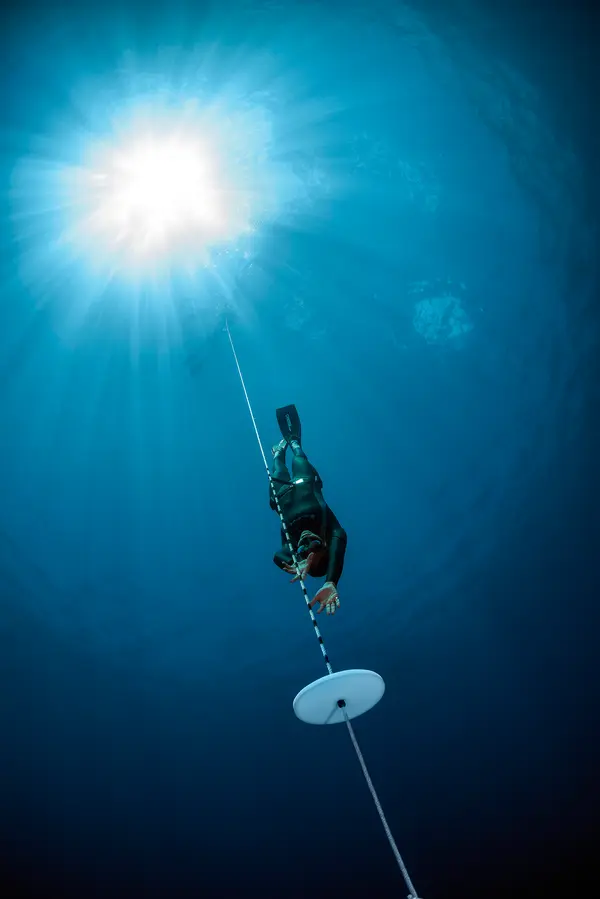
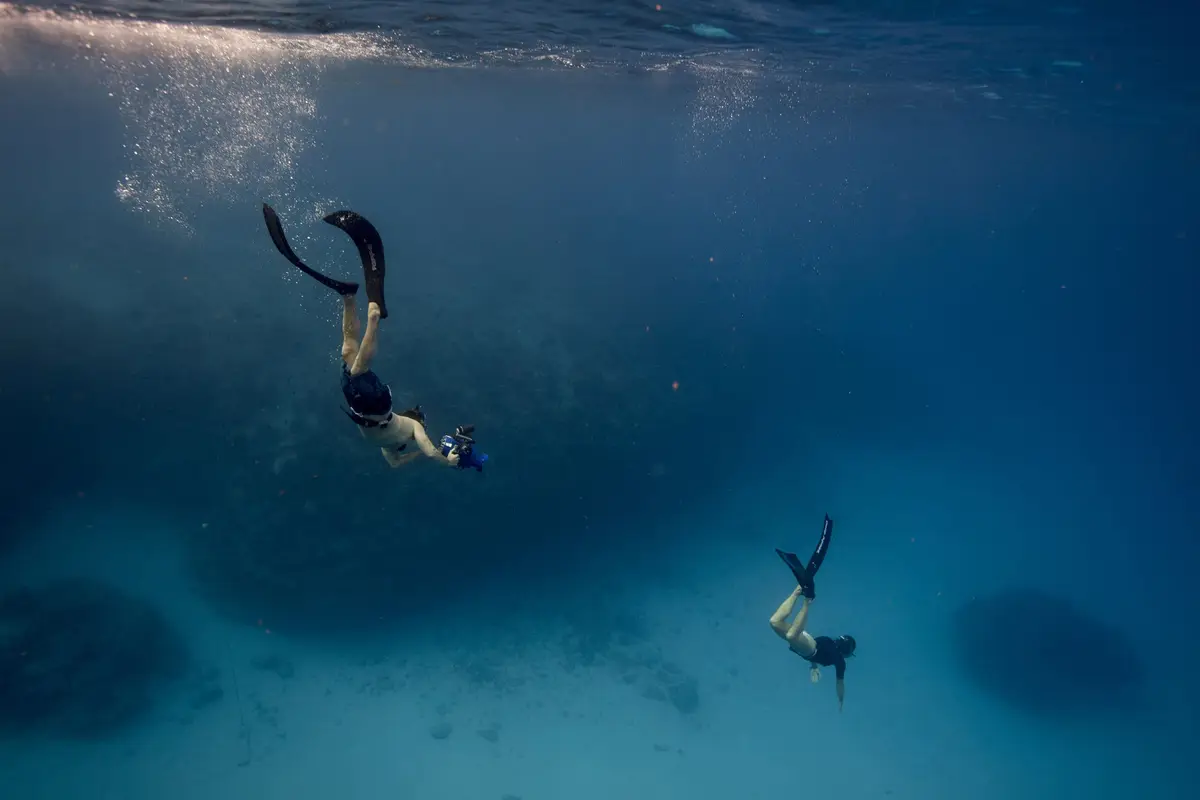
This is the core certification and the one most people book. Over roughly two to three days you learn breathing and relaxation, master static and dynamic apnea in confined water, then descend the line in Boracay's blue using free immersion and constant weight to a maximum of 16 metres (52 feet). Taught patiently, in small groups, never rushed. It earns you a lifetime PADI Freediver certification — you are qualified to freedive with a buddy to 16m — and it is the prerequisite for going further. Full details and the current rate are on the PADI Freediver course page.
3. PADI Advanced Freediver — depth to 24m
Already certified and hungry for more? Advanced Freediver takes you to a maximum depth of 24 metres. Across two to three days of confined- and open-water sessions you sharpen your static and dynamic apnea, refine your finning and streamlining until every movement is efficient, and build the mental calm that real depth demands. Small groups and personal coaching mean the progression is genuine, not just a certificate. You will need your PADI Freediver certification first.
What's included and what to expect
Every certification course includes your PADI eLearning, all freediving gear (mask, snorkel, long fins, wetsuit and weights), and DAN dive insurance for the training. You will split your time between theory, a confined-water session to drill the skills safely, and open-water line dives in Boracay's sheltered, warm water. Because we cap group sizes, your instructor can watch every dive closely — which is exactly what makes freediving safe and progress fast.
Requirements: age, swimming and fitness
Freediving courses are open to anyone aged 12 and over who can swim comfortably and is at ease in the water. For the full Freediver course there is a light watermanship check — a 200-metre swim and a 10-minute float — to confirm you are relaxed, not to test athleticism. You do not need any scuba or prior freediving experience to start with Basic or Freediver. Advanced Freediver is the one level that has a prerequisite: the PADI Freediver certification.
Not sure you want to commit to a course yet?
If certification feels like a big first step, try a Discover Freediving session first — a guided taster where you experience your first calm descent on a single breath with no certification required. Many guests do the taster, love it, and roll straight into the Freediver course the next day. Our complete beginner's guide to freediving in Boracay is a good read before you arrive, and you can see the whole programme on the freediving page.
Why get your freediving certification in Boracay
Boracay's leeward dive sites give you calm, clear, warm water almost year-round — close to ideal conditions to learn to freedive. Add a PADI 5★ resort with a dedicated freediving programme, instructors who teach in several languages, and small groups, and you have a place where a nervous first-timer can become a confident 16-metre freediver in a long weekend. Compare the levels side by side on our freediving certifications page and pick your starting point.
Frequently asked questions
How long does a freediving course in Boracay take?
Basic Freediver can be completed in a single day. The full PADI Freediver and the Advanced Freediver courses each take roughly two to three days, split between theory, confined-water skills and open-water line dives.
How deep will I go?
Basic Freediver is confined-water only, with no depth on the line. The PADI Freediver course certifies you to a maximum of 16 metres (52 feet), and Advanced Freediver takes you to 24 metres.
Do I need to be a strong swimmer or very fit?
No. You need to be able to swim comfortably and feel at ease in the water. The Freediver course includes a light 200-metre swim and a 10-minute float to confirm you are relaxed — it is not an athletic test.
What's the minimum age?
All our freediving courses are open to anyone aged 12 and over.
How much does a freediving course cost?
Prices vary by level, and each course includes eLearning, gear and DAN dive insurance. For the current rate, see the individual course pages — the PADI Freediver course is the most popular starting point. A 10% web and cash discount applies.
Do I need a course, or can I just try it?
You can try freediving first with a no-certification Discover Freediving session, then decide. Many guests do the taster and continue straight into the Freediver certification.