






Night diving in Boracay surprises even divers who have logged hundreds of dives. The same house reef you snorkel over by day turns into a completely different world after sunset — seahorses cling to the seagrass, squid hover in your torch beam, and flounders rise out of the sand to hunt. The best part is that you don't need a boat: our guided shore night dive walks straight in from the beach in front of the shop, so you're exploring the reef after dark within minutes of gearing up. Here's exactly what to expect, what you'll see, and how to do your first night dive safely.
What a night dive in Boracay is actually like
A night dive is calmer and more intimate than you'd imagine. Your world shrinks to the warm pool of light your torch throws across the reef, and because you're not scanning the whole horizon, you notice tiny things you'd swim straight past in daylight. The reef doesn't sleep — the day shift clocks off and the night shift clocks on. Any certified diver can do it, there's no course or theory involved, and the whole experience from the beach to the warm shower afterward takes just a couple of hours.
Why the reef changes after dark
During the day, most reef fish keep moving and the really interesting critters stay tucked away. As the light drops, the balance flips. Ambush predators come out to hunt, parrotfish and wrasse settle into crevices and some wrap themselves in a mucus cocoon to sleep, and coral polyps open up to feed, giving the reef a soft, fuzzy texture you never see by day. Crustaceans that hide from the sun emerge to forage, and their eyes glow back at you like tiny gems in the torchlight. It's the same reef, running on a completely different clock.
What you'll see on a Boracay night dive
No two night dives are identical, but on our house reef you can reasonably hope to meet:
- Seahorses hooked onto the seagrass, far easier to spot once everything else has gone quiet.
- Squid and cuttlefish hanging in the water column, changing colour as your light touches them.
- Flounders and other flatfish lifting off the sand to hunt across the open bottom.
- Sleeping fish — parrotfish in their mucus cocoons, wrasse wedged into the coral.
- Crabs, shrimp and other crustaceans out foraging, their eyes reflecting your torch.
- Feeding coral polyps and the occasional hunting lionfish drifting in to use your light.
Cover your torch for a moment on a dark night and you may even see tiny sparks of bioluminescence as you wave a hand through the water — a quiet piece of magic that seals the dive for most people.
Our guided shore night dive — how it works
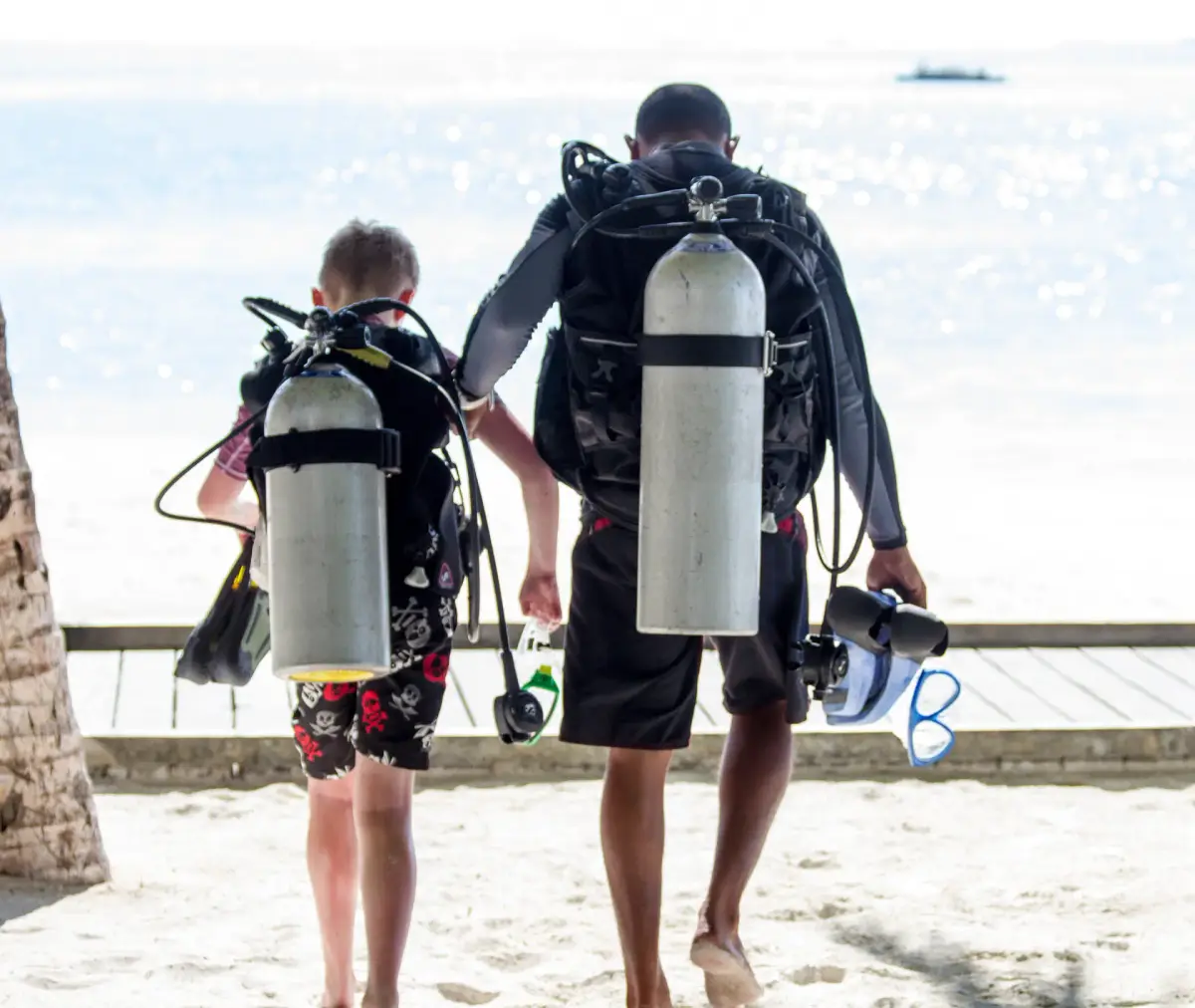
You meet us at the shop around dusk. There's no boat and no long transfer: we hand you full scuba gear, a dive computer and a dedicated torch, run a relaxed briefing, and then you walk straight in from the beach to the house reef. Your instructor is in the water with you the whole time, so you're never finding your own way in the dark. It's an easy, shallow reef dive kept well within your comfort and certification level, and because it's a guided shore night dive there's no theory and no waiting around — just you, your guide and the reef after dark. Afterward there's a warm shower back at the shop to round off the evening.
Do you need to be certified?
Yes — a night dive is for certified divers (PADI Open Water or equivalent, and above), and we welcome every agency; just bring your certification card and logbook. Not certified yet? You have two easy paths. Try scuba by day first with our Discover Scuba Diving experience, which needs no certification, and come back for the night dive once you've earned your Open Water certification here in Boracay. Plenty of divers finish their Open Water course with us and book their very first night dive a day or two later — it's a brilliant way to celebrate a new card.
What's included and what to bring
Every night dive includes full scuba equipment, a dive computer, a dedicated dive torch and a PADI professional in the water beside you. All you need to bring is your certification card, your logbook and a swimsuit. A small backup light and a warm layer for after the dive are nice to have on cooler evenings but aren't required — the water stays warm and we've got the lighting covered. If you dive with your own torch or camera, you're welcome to bring them along.
Make it part of a dive package
A single night dive is a complete experience on its own, but it also counts toward a Fun Dive package — buy 3, 5 or 7 dives and mix day and night however you like, with the per-dive rate dropping each time you splash in. Prices shift with the season and current promotions, so check the night dive page for the live rate rather than trusting a figure online. If you're planning several dives across your stay, our guide to fun diving in Boracay breaks down how the packs work for certified divers.
Tips for your first night dive
Stay close to your guide and your buddy, and keep your torch pointed down and ahead rather than into anyone's eyes — a slow circle of your light means "I'm OK," while a fast side-to-side wave means "get my attention." Move slowly and breathe slowly; there's no rush and the critters reward patience. Trust your computer and your guide for depth and direction, and if the dark feels strange for the first few minutes, just focus on the pool of light in front of you — that nervousness almost always melts into fascination within five minutes. Relax, and let the reef come to you.
When to go and how to plan
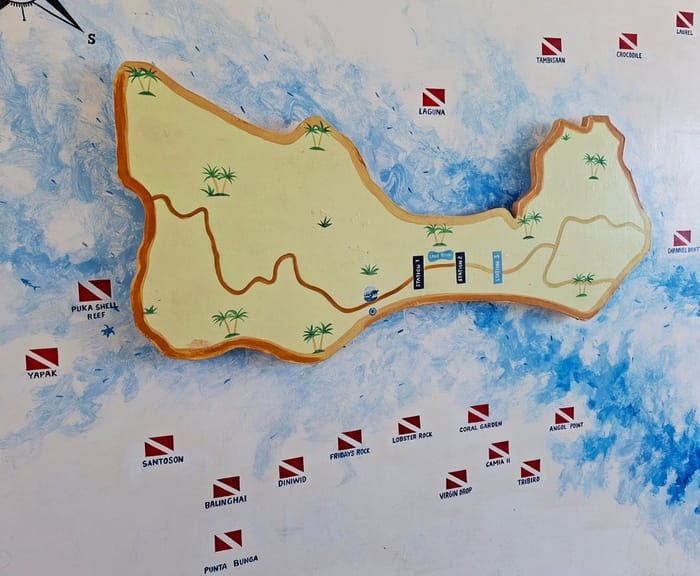
Night dives run after dark year-round, and Boracay's water stays a comfortable 27–29°C whatever the month. The calmest, clearest conditions fall during the Amihan season, roughly November to May — our best time to dive in Boracay guide has the full seasonal picture. Night dives are popular and run in small groups, so it's worth booking a day or two ahead; get in touch and we'll slot you in. Curious which reef you'll be exploring? Browse the full list of Boracay dive sites to see what's on your doorstep.
Frequently asked questions
Do I need to be a certified diver to do a night dive in Boracay?
Yes. A night dive is for certified divers — PADI Open Water or equivalent and above — and we welcome every agency, so bring your card and logbook. If you're not certified yet, try our day-time Discover Scuba Diving experience, then come back after your Open Water course for the night dive.
How deep do you go on the night dive?
It's an easy guided shore dive on our shallow house reef, so depths stay gentle and well within your certification. The goal is a calm, critter-focused dive close to home, not a deep one.
What will I see on a night dive?
Expect seahorses, squid and cuttlefish, flounders hunting over the sand, sleeping parrotfish, foraging crabs and shrimp, and feeding coral polyps. On dark nights you may also spot sparks of bioluminescence.
How much does a night dive in Boracay cost?
A single night dive has a set price, and it drops per dive when you roll it into a 3, 5 or 7-dive Fun Dive package. Because rates change with seasons and promotions, check the night dive page for the current price.
Is night diving safe, or is it scary?
With a dedicated torch, an instructor in the water with you and a shallow, familiar reef, night diving is calm and controlled. Most first-timers feel a flicker of nerves at the start and are grinning within a few minutes.
Do I need to bring my own torch and gear?
No. Full scuba gear, a dive computer and a dive torch are all included. Just bring your certification card, logbook and a swimsuit; a backup light and a warm layer are optional extras.