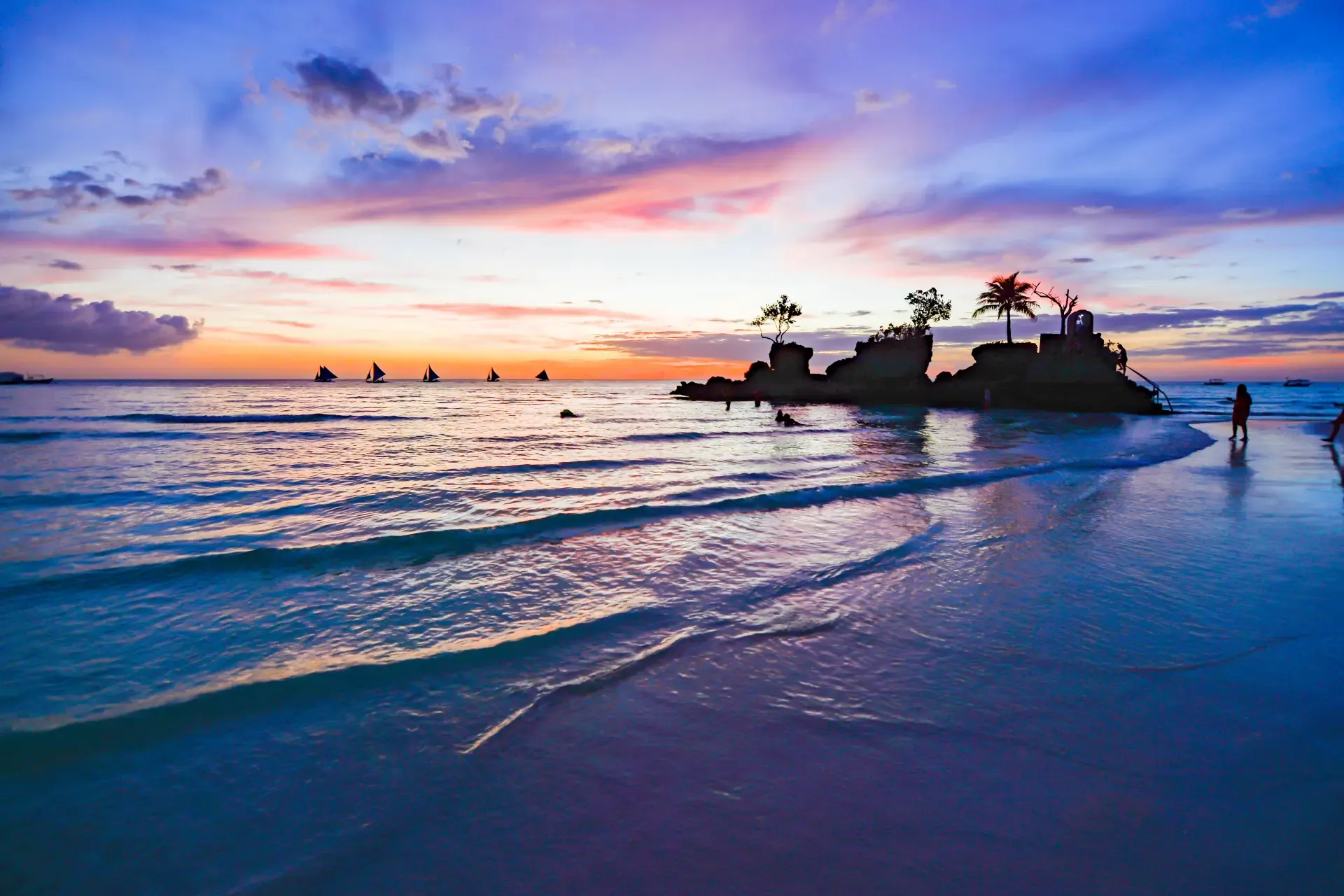
family friendly diving boracay

Best Family-Friendly Dive Experiences in Boracay

Best Family-Friendly Dive Experiences in Boracay

Best Family-Friendly Dive Experiences in Boracay

Boracay isn’t just a tropical paradise for honeymooners and solo travelers—it’s an ideal destination for families looking to share unforgettable underwater adventures together. Whether you’re introducing your kids to the wonders of the ocean for the first time or diving as a seasoned group, New Wave Divers Boracay makes it easy, safe, and fun to explore the island’s incredible marine life and dive sites together.

Why Boracay Is Ideal for Family Diving

Thanks to its calm, clear waters and a wide range of beginner-friendly dive sites, Boracay is perfect for families at different skill levels. The visibility is excellent year-round, the currents are typically manageable, and many sites feature shallow depths ideal for entry-level and junior divers. With short boat rides and plenty of surface interval activities, families can comfortably plan a full day of both ocean and beach time.

Introductory Dive Programs for Kids and Parents

At New Wave Divers, we offer PADI programs tailored to families who are new to diving. The Discover Scuba Diving experience is a great way for adults and teens to try scuba for the first time, with no prior experience required. It includes a short orientation followed by a guided dive to a shallow reef, where participants can see vibrant coral and fish up close.

Children aged 8 and up can join our Bubble Maker experience, a shallow water introduction designed just for kids. With full instructor supervision and gear fitted specifically for smaller divers, it’s a memorable way to spark curiosity and confidence under the sea.

Courses That Bring the Family Together

For families ready to dive deeper into scuba, New Wave Divers offers full certification courses. Teens as young as 10 can complete their Junior Open Water certification alongside a parent or sibling, turning learning into an unforgettable bonding experience. Courses are taught in small groups with personalized attention to ensure every diver feels safe and supported.

Top Dive Sites for Families in Boracay

Some dive sites are especially well-suited to family outings due to their shallow depth, calm waters, and marine life variety. Here are a few favorites recommended by our instructors:

  • Coral Garden: Gentle conditions, shallow reef, and a colorful range of fish like parrotfish, rabbitfish, and clownfish make it ideal for first-timers.
  • Angol Point: A perfect site for young divers or snorkelers, home to ribbon eels, butterflyfish, and other charismatic reef dwellers.
  • Diniwid: Offers a chance to see turtles, mantis shrimp, and sea snakes in a calm environment—great for building confidence underwater.

Marine Life the Whole Family Will Love

One of the joys of diving as a family in Boracay is the opportunity to witness its abundant and colorful marine life. Kids and adults alike are amazed by the diversity of species: from Nemo-like clownfish darting through anemones to sea turtles gracefully gliding by. Encounters with puffers, trumpetfish, nudibranchs, and even octopus create unforgettable moments and spark a lifelong appreciation for the ocean.

Why Families Choose New Wave Divers

New Wave Divers has built a reputation for delivering safe, friendly, and highly personalized dive experiences. We understand that family diving is about more than just depth and duration—it’s about building trust, creating joy, and fostering a shared love for the underwater world. Our instructors are trained in working with children and first-time divers, and we take great pride in tailoring every trip to your group’s comfort and skill level.

We also offer flexible scheduling, equipment sized for children, and surface support for non-diving family members. Whether you’re joining us for a fun dive, training together, or cheering on your little explorer from the boat, we make sure your family feels like part of ours.

Plan Your Family Dive Adventure Today

There’s no better place than Boracay to dive into a family-friendly underwater adventure. Whether your goal is to try diving for the first time, complete a certification, or simply share some ocean magic with your loved ones, New Wave Divers has the expertise and enthusiasm to make it happen.

Ready to create your family’s next great memory? Contact us today and let’s start planning your perfect dive experience in Boracay.

Tips for a Smooth Family Dive Day

To make the most out of your family diving experience in Boracay, a bit of preparation goes a long way. At New Wave Divers, we help families feel confident and excited from the first inquiry to the final dive. Here are some key tips to ensure your family dive day goes smoothly:

  • Book in advance: Reserve your spot early, especially during school holidays or peak travel seasons, to secure your preferred schedule and dive sites.
  • Pack light but smart: Sunscreen, swimsuits, dry towels, water bottles, and snacks are must-haves. We provide all dive gear, including child-sized equipment.
  • Listen to the briefing: Pre-dive briefings are not just for safety—they’re full of helpful hints about marine life, dive conditions, and signals your kids can easily learn too.
  • Stay hydrated and take breaks: We encourage regular breaks, and our team always has fresh water and shade ready on the boat.

Other Great Options for Mixed-Skill Families

If your family includes both divers and snorkelers, or if some are still warming up to scuba, Boracay still has plenty to offer. Sites like Puka Shell and Tambisaan feature shallow reef areas perfect for snorkeling, with vibrant reef fish and corals visible just beneath the surface. These locations offer the whole family a chance to explore together at different depths.

And for those ready for a little more adventure, sites like Friday’s Rock or Channel Drift can be introduced gradually, under the watchful eye of our instructors who adjust every dive based on comfort and confidence levels.


Wish to know more about the diving in Boracay? Our team will be delighted to answer your questions and let us know why we should be your first choice when planning your dive vacation to the Philippines. We hope to hear from you soon!

Contact Us

Continue reading

trumpetfish boracay

Crocodile Island Dive Site Guide | Explore Boracay’s Underwater Gem

Crocodile Island Dive Site Guide: What to Expect Below the Surface

Crocodile Island Dive Site Guide: What to Expect Below the Surface

Just a short boat ride from the powdery sands of White Beach lies one of Boracay’s hidden diving gems: Crocodile Island. Named for its crocodile-like silhouette when viewed from afar, this dive site offers an immersive experience that blends top-notch coral health, dramatic underwater terrain, and an impressive array of marine life. Divers from around the world journey here to explore its vibrant slopes, catch glimpses of elusive critters, and enjoy the thriving ecosystem just beneath the surface.

Dive Profile

The topography of Crocodile Island features a gently sloping reef that transitions into deeper walls, with scattered boulders, small caverns, and rich coral gardens along the descent. This makes it an ideal site for both beginner and advanced divers, as well as certified divers looking to enjoy a fun dive with vibrant scenery and fascinating encounters.

  • Depth range: 5 to 22 meters (16 to 72 feet)
  • Visibility: Commonly between 20 and 30 meters
  • Current: Mild to moderate, but can intensify depending on tide conditions
  • Skill level: All levels (but best dived with a guide due to potential current changes)

Marine Life Highlights

The reef’s health at Crocodile Island supports a dynamic population of reef dwellers and pelagic visitors. Expect to see dense clouds of anthias dancing above coral outcrops, schools of yellowtail fusiliers moving in unison, and occasional larger species like jacks cruising the edges of the reef.

Macro enthusiasts are particularly fond of this site for its abundance of nudibranchs, ghost pipefish, frogfish, and pipefish—all known for their superb camouflage. Look closely into crinoids or feather stars and you might spot a tiny squat lobster or shrimp hiding in plain sight.

  • Reef Fish: Bannerfish, sweetlips, Moorish idols, butterflyfish
  • Macro Life: Nudibranchs, seahorses, shrimpfish, frogfish
  • Predators: Lionfish, scorpionfish, occasionally barracuda
  • Other: Sea crates (sea snakes), blue-spotted rays, and hawksbill turtles

More Marine Life to Discover

Every dive at Crocodile Island is a reminder of the extraordinary biodiversity the Philippine archipelago is known for. Some of the coral bommies are home to massive sponges and sea fans, while smaller crevices shelter shy species such as cardinalfish and squirrelfish. More observant divers might also spot reeftop pipefish gliding along the sand patches or juvenile boxfish tucked beneath ledges.

Larger pelagics occasionally cruise through the site. Divers have reported sightings of eagle rays and large trevallies patrolling the drop-off zone. With the right timing and a bit of luck, it’s not uncommon to catch glimpses of hunting barracudas or even a passing white-tip reef shark.

Crocodile Island also supports a healthy community of crustaceans and invertebrates. Boxer shrimp, porcelain crabs, and decorator crabs all contribute to the site’s rich ecological tapestry. At night, the reef comes alive in an entirely different way, with nocturnal critters emerging from their hiding places.

Best Time to Dive

Crocodile Island is diveable year-round, but the period between November and May generally offers the most consistent conditions. During this time, the seas are calmer, currents are predictable, and visibility is often at its best.

April in particular is an excellent month for spotting a variety of marine life due to water clarity and comfortable temperatures averaging 27–29°C (80–84°F). Whether you’re logging your first open water dives or adding to a photography portfolio, conditions this time of year are ideal.

Diving Crocodile Island with New Wave Divers

At New Wave Divers Boracay, we pride ourselves on offering safe, memorable, and expertly guided dive trips to Crocodile Island. Our team of experienced instructors and local dive professionals knows the site intimately, from the quiet coral alcoves where frogfish lurk to the cleaning stations frequented by larger fish.

If you’re planning to pursue dive certification, Crocodile Island also serves as an excellent training site for buoyancy control, navigation, and marine life identification. The relatively shallow depth and clear visibility make it perfect for honing new skills in a stunning environment.

Tips Before You Dive

  • Arrive early to avoid surface traffic and maximize calm conditions.
  • Bring an underwater camera—macro and wide-angle lenses will both be rewarding here.
  • Let your dive guide know if you’re looking for specific creatures—many know where to find them.
  • If you’re unsure where to begin, simply contact us and we’ll help set up your perfect dive day.

Why Dive with New Wave Divers?

As one of Boracay’s most experienced and trusted dive centers, New Wave Divers offers more than just guided dives—we deliver fully immersive, personalized underwater experiences. Our team doesn’t just lead dives; we share knowledge about reef ecology, point out hard-to-spot species, and tailor each dive to match your skills and interests.

We keep our groups small to maximize safety and enjoyment. Whether you’re joining us for a fun dive, working through your next certification, or just exploring what Boracay diving has to offer, we ensure that every experience is personal and memorable. Crocodile Island is one of our most requested sites—and for good reason.

If you’re curious about diving in Boracay or need help planning your trip, don’t hesitate to get in touch. We’ll help you build the perfect dive itinerary that fits your schedule, skill level, and underwater wishlist.

Crocodile Island may not be the most talked-about dive site on the map, but those who explore its reefs quickly understand why it remains a favorite among seasoned divers and new adventurers alike. From technicolor coral heads to fascinating marine encounters, it’s a site that offers something new every time you descend.

Book your next dive with New Wave Divers and experience for yourself the underwater treasures waiting at Crocodile Island.


Wish to know more about the diving in Boracay? Our team will be delighted to answer your questions and let us know why we should be your first choice when planning your dive vacation to the Philippines. We hope to hear from you soon!

Contact Us

Continue reading

Boracay 2025: Is It Still Worth Visiting? The Honest Answer

Boracay 2025: Is It Still Worth Visiting? The Honest Answer

Short answer: YES—especially if you care about the ocean.

Once famous for its beach parties and chaotic tourism, Boracay has undergone a complete transformation in recent years. In 2025, it’s not just about white sand and turquoise waters anymore—Boracay is now a destination for mindful travelers, ocean lovers, and eco-conscious adventurers.

And if you’re into scuba diving, snorkeling, or anything ocean-related, there’s never been a better time to visit.


🌿 The Transformation of Boracay: What Changed Since the Closure

In 2018, the Philippine government took the bold step of closing Boracay for six months due to unsustainable tourism practices and environmental degradation. What followed was a massive rehabilitation effort focused on cleaner beaches, better waste management, and eco-friendly tourism laws.

Fast-forward to 2025, and those efforts have paid off. The island has:

  • Enforced visitor caps to prevent overcrowding
  • Upgraded infrastructure (roads, drainage, and waste systems)
  • Strengthened rules on environmental protection
  • Made certain zones off-limits to development or harmful activities

Most importantly, local businesses like ours—New Wave Divers—have joined the movement, organizing monthly beach clean-ups, using reef-safe products, and promoting ocean-friendly experiences.


🐚 Is Boracay Still Beautiful in 2025?

Absolutely. If anything, it’s even more stunning now.

  • White Beach is clean, calm, and still jaw-droppingly beautiful.
  • Puka Shell Beach offers a more serene vibe and crystal-clear waters.
  • Lesser-known spots like Diniwid and Tambisaan give you that secret-beach feel, without the crowds.

And the ocean? Healthier than it’s been in years. Coral reefs are recovering, marine life is thriving, and visibility is better than ever—especially for divers.


🌊 Why Boracay Is a Scuba Diver’s Paradise in 2025

With calmer crowds and cleaner waters, Boracay is back on the map as a top diving destination in the Philippines. Whether you’re a seasoned diver or curious to try it for the first time, there’s something here for everyone.

At New Wave Divers, we offer:

  • Daily Fun Dives to vibrant reefs, walls, and wrecks like the Camia 2
  • Scuba Diving Courses from beginner to advanced (PADI-certified)
  • Diving Safaris to less-explored spots with rich marine biodiversity
  • Top-quality gear, small group sizes, and a deep commitment to ocean safety and education

💡 Not certified yet? Start your journey with our Open Water Diver Course and earn a lifetime certification in just a few days!


🌱 Sustainable Fun: Things to Do in Boracay in 2025 (That Are Ocean-Friendly)

Boracay now caters to travelers who want more than a tan. Here are some eco-conscious activities you can enjoy:

🤿 Learn to Scuba Dive

Get PADI-certified in paradise! Our scuba diving courses are perfect for first-timers and include personalized training, brand-new equipment, and a dive into marine conservation.

🧜‍♀️ Mermaid Diving

Yes, it’s real—and wildly popular. With our Mermaid Diving Experience, you can swim like a mermaid using a custom monofin or just pose for stunning souvenir photos underwater. Magical and beginner-friendly!

🐠 Guided Snorkeling & Marine Education

Snorkel Boracay’s thriving coral gardens and learn about the reef ecosystem. We offer reef education to make sure you’re enjoying the ocean without harming it.

🚮 Join a Beach Clean-Up

Want to give back? Join our monthly beach clean-ups and help protect the very shoreline you’re enjoying. It’s a great way to connect with fellow travelers and make an impact.

🌅 SUP & Kayak Adventures

Explore calm coves by stand-up paddleboard or kayak—quiet, eco-friendly, and a great way to spot wildlife like sea turtles or rays.

🧘‍♀️ Wellness with a View

Unwind with beachfront yoga, eco-resort massages, or natural therapies inspired by local traditions. Perfect for post-dive relaxation.

🍃 Support Local & Sustainable

Eat at farm-to-table restaurants, shop from handmade local businesses, and stay in resorts committed to renewable energy and waste reduction.


🙋 Is Boracay Right for You in 2025?

Yes—if you care about:

  • The ocean
  • Sustainable travel
  • Small group adventures
  • Local culture
  • Environmental impact

The wild, party-all-night Boracay is long gone. Today, the island asks for respect—and rewards visitors with beauty, authenticity, and depth in return.


🌊 Ready to Dive Into Boracay?

Whether you’re planning your first dive or looking for an eco-adventure with a deeper meaning, New Wave Divers is here to guide you. We’re proud to be part of Boracay’s sustainable future, and we’d love to show you the best the island has to offer—above and below the surface.

👉 Check out our dive programs
👉 Book your next dive
👉 Learn more about how we protect the ocean


Still wondering if Boracay is worth visiting in 2025?
Come dive with us—and find out for yourself.

Wish to know more about diving ? Visit our web site and find out more information or contact us! Our team will be delighted to answer your questions. We hope to hear from you soon!

Contact Us

Continue reading

underwater photography boracay

Top Underwater Photo Spots in Boracay (And What You’ll See There)

Top 5 Marine Species to Spot in Boracay This Month

Top 5 Marine Species to Spot in Boracay This Month

April is one of the best months to explore Boracay’s underwater world. With warm, calm waters and excellent visibility, divers are treated to a vibrant display of marine life across the island’s diverse dive sites. While there’s always something new to discover on every dive, this month brings ideal conditions for spotting some of Boracay’s most iconic and fascinating marine residents.

Whether you’re diving into the deep walls of Yapak, drifting past coral gardens at Crocodile Island, or exploring the vibrant wreck of Camia II, here are five standout species you’ll want to watch for this April.

frogfish boracay1. Frogfish

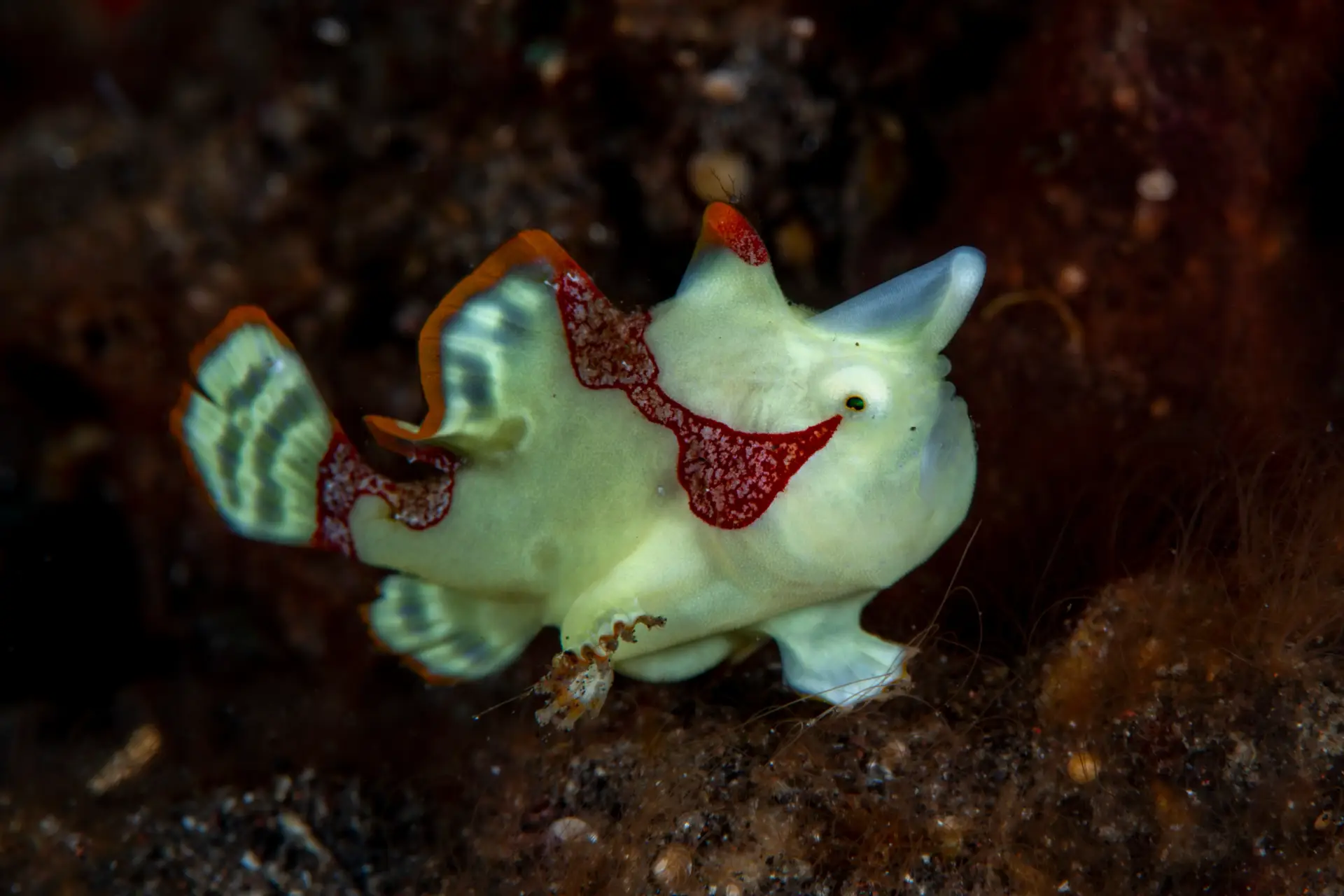
April is prime time for spotting frogfish, especially at sites like Angol Point, Crocodile Island, and Balinghai. These bizarre and brilliantly camouflaged creatures are true masters of disguise. Their lumpy bodies and sponge-like textures allow them to blend in seamlessly with their surroundings, making them a favorite find among photographers and macro enthusiasts.

Frogfish are ambush predators, using a fleshy lure on their heads to attract unsuspecting prey. Don’t be fooled by their sluggish appearance—they can strike with incredible speed. Look closely along sponge-covered rock faces and coral outcrops, and you might just spot one sitting still, waiting to pounce.

blue spotted ray boracay2. Blue-Spotted Ribbontail Ray

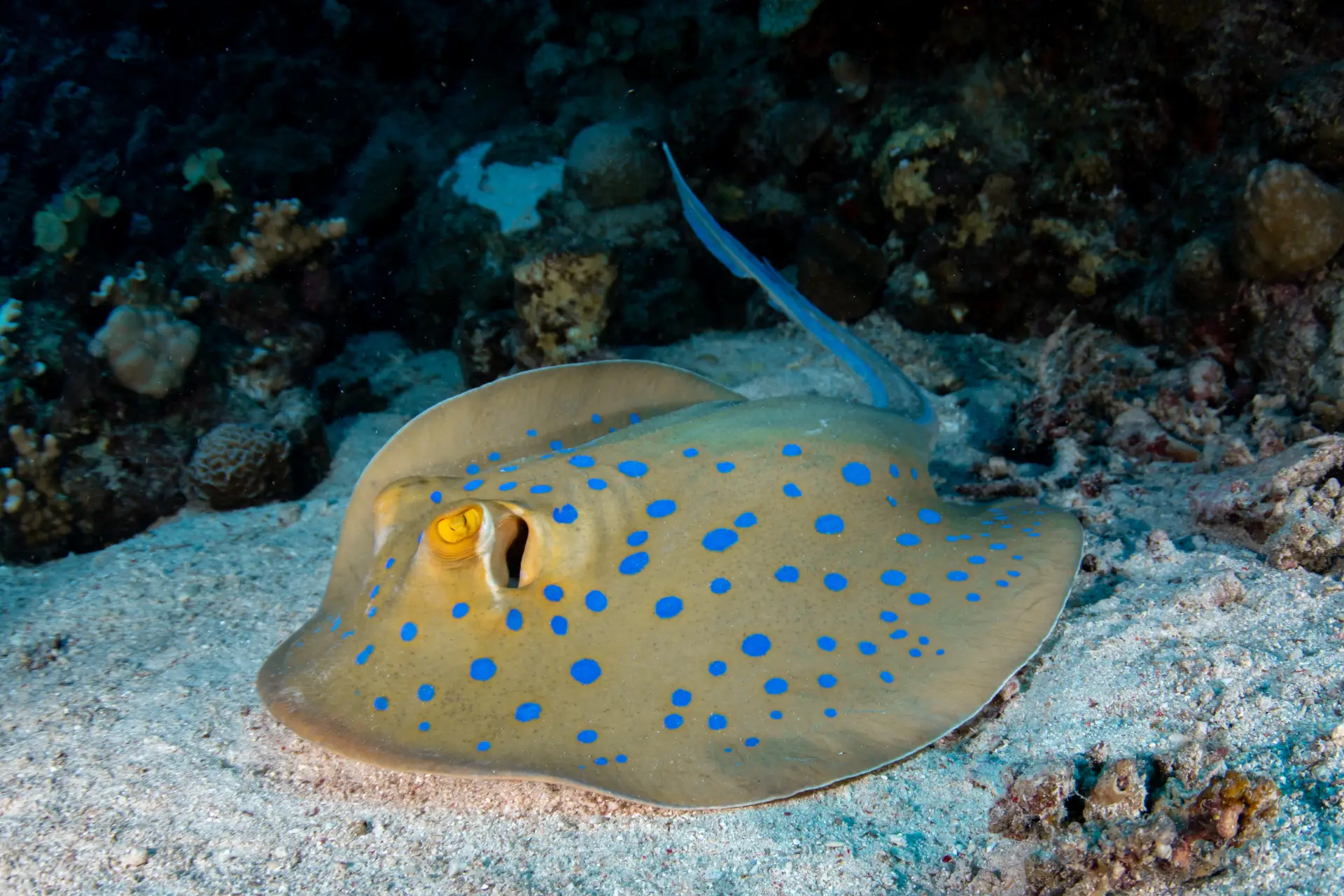
This striking species is often seen gliding gracefully across sandy patches near reefs, and is frequently spotted in Santoson, Tambisaan, and Channel Drift. Their electric-blue spots and ribbon-like tails make them one of the most visually stunning rays in Boracay’s waters.

April’s calmer seas and clearer visibility give divers an excellent chance to see these rays resting on the bottom or gliding just above the sand. While generally shy, they may pause long enough for a great photo—just remember to maintain a respectful distance.

3. Ghost Pipefish

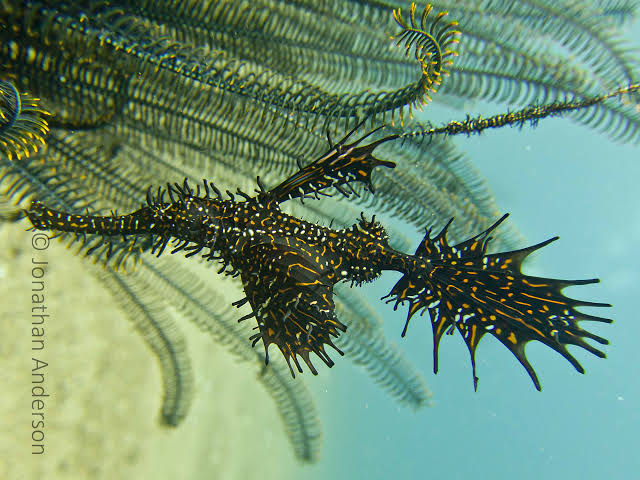
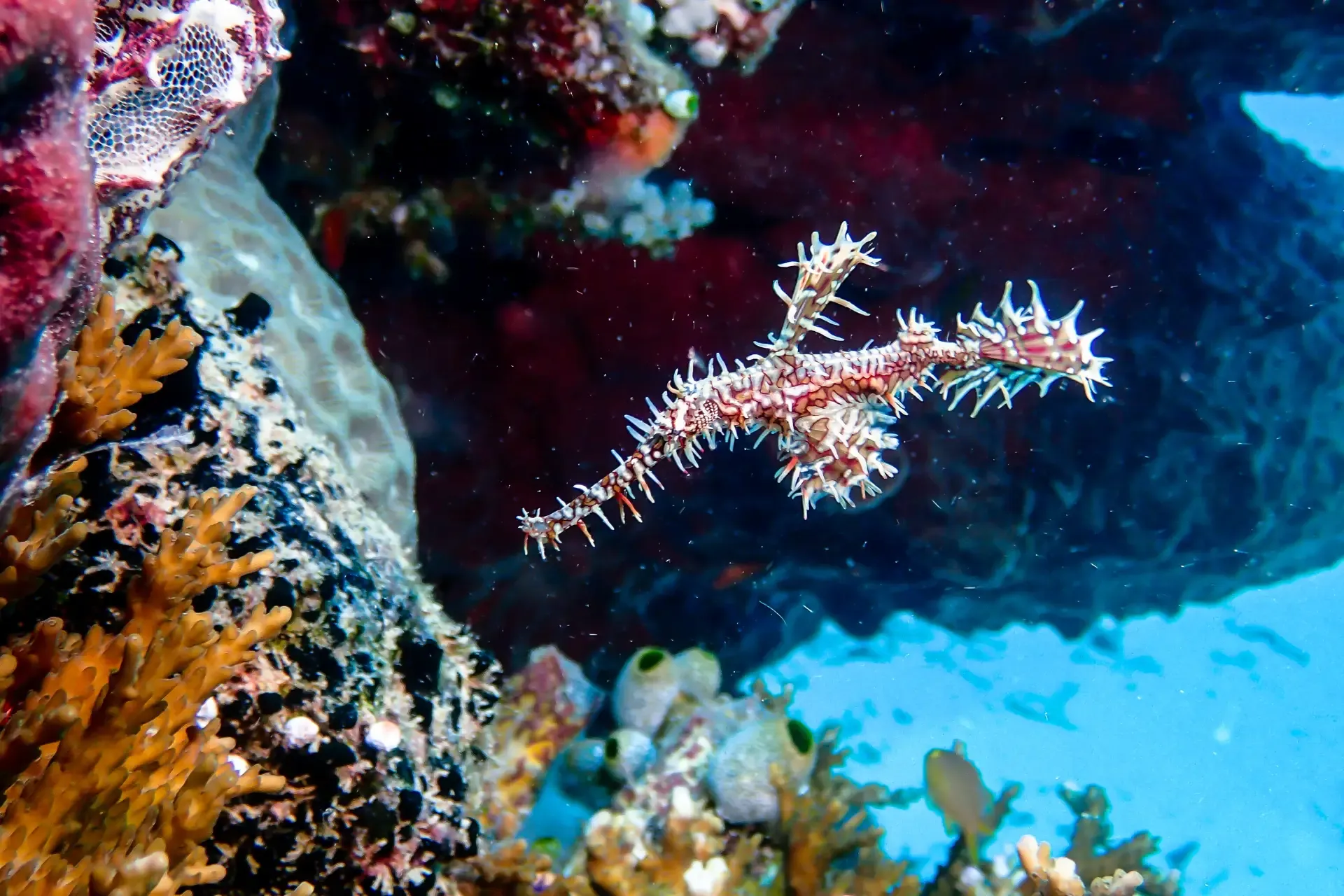
Elusive and delicate, the ghost pipefish is a favorite among seasoned divers and macro photographers. These fascinating creatures can be seen hovering near feather stars or soft coral at dive sites like Camia II and Crocodile Island.

Ghost pipefish are seasonal visitors to Boracay’s reefs, and April is one of the best times to find them. Their ornate fins and cryptic patterns allow them to mimic their surroundings with astonishing precision. They often appear in pairs and are usually motionless, blending into the reef until they gently drift with the current.

4. Clownfish

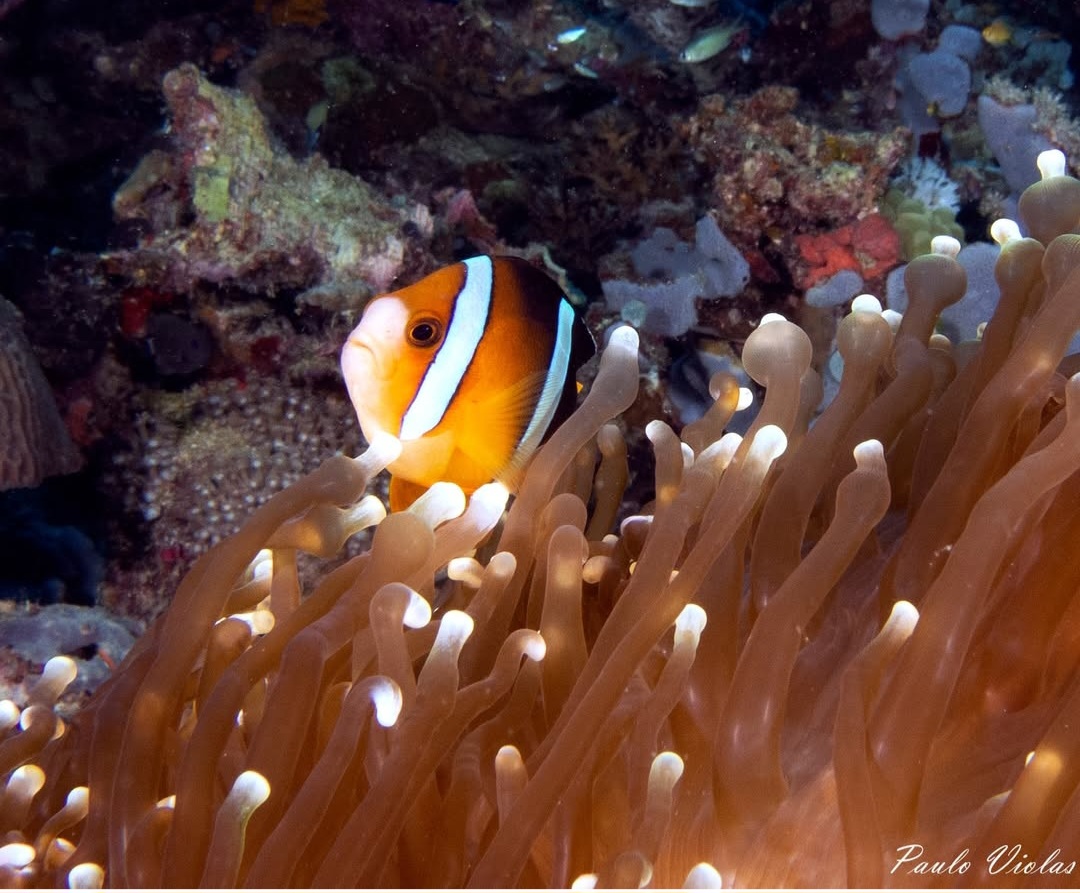
No dive in Boracay is complete without spotting a few of these iconic reef residents. Found at nearly every dive site, including Angol Point, Coral Garden, and Diniwid, clownfish live symbiotically with sea anemones, which protect them from predators.

April’s clear waters provide perfect visibility to observe these colorful characters as they dart in and out of their host anemones. Watch for different species—from the classic orange-and-white false clownfish to darker-colored varieties—and enjoy observing their playful, sometimes territorial behavior.

5. Whitetip Reef Shark

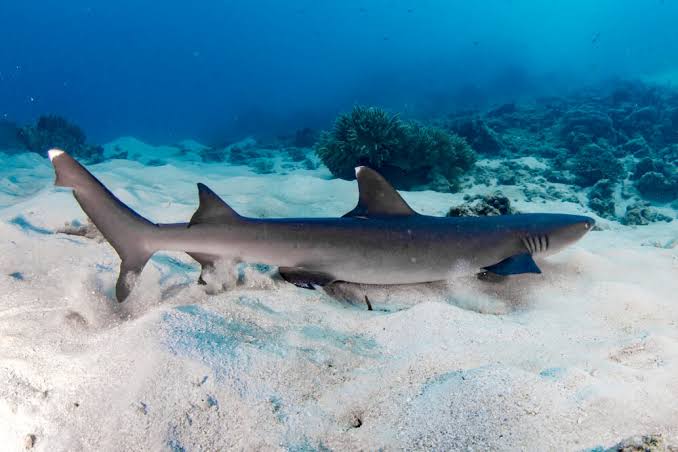
For those craving a larger marine encounter, April is a great month to see whitetip reef sharks at deeper dive sites like Yapak and Punta Bunga. These sleek predators are commonly seen resting on sandy patches or ledges during the day, often motionless and unbothered by divers.

While they may look intimidating, whitetip reef sharks are not aggressive toward humans and are an important part of the reef ecosystem. With April’s excellent visibility, you’ll have the chance to appreciate their streamlined form and graceful movement—an unforgettable moment for any diver.

Where to Dive for the Best Marine Life Sightings

Here’s a quick summary of where you’re most likely to see these incredible species this month:

  • Frogfish: Angol Point, Balinghai, Crocodile Island
  • Blue-Spotted Rays: Santoson, Tambisaan, Channel Drift
  • Ghost Pipefish: Camia II Wreck, Crocodile Island
  • Clownfish: Angol Point, Coral Garden, Diniwid
  • Whitetip Reef Sharks: Yapak, Punta Bunga

Final Thoughts

April offers ideal conditions for marine life encounters around Boracay’s dive sites. Whether you’re diving shallow reefs or exploring deeper walls and wrecks, keep your eyes open for these five incredible species. And don’t forget to bring your underwater camera—this is one of the most photogenic months of the year!

At New Wave Divers Boracay, our experienced dive team knows exactly where to find these creatures and more. Join us this month for fun dives, PADI courses, or full-day safaris to make the most of your Boracay dive adventure.

Book your dive today and let’s explore the vibrant marine life waiting just beneath the surface!


Wish to know more about the diving in Boracay? Our team will be delighted to answer your questions and let us know why we should be your first choice when planning your dive vacation to the Philippines. We hope to hear from you soon!
Contact Us

Continue reading

Top 5 Marine Species to Spot in Boracay This Month

Top 5 Marine Species to Spot in Boracay This Month

Top 5 Marine Species to Spot in Boracay This Month

April is one of the best months to explore Boracay’s underwater world. With warm, calm waters and excellent visibility, divers are treated to a vibrant display of marine life across the island’s diverse dive sites. While there’s always something new to discover on every dive, this month brings ideal conditions for spotting some of Boracay’s most iconic and fascinating marine residents.

Whether you’re diving into the deep walls of Yapak, drifting past coral gardens at Crocodile Island, or exploring the vibrant wreck of Camia II, here are five standout species you’ll want to watch for this April.

frogfish boracay1. Frogfish

April is prime time for spotting frogfish, especially at sites like Angol Point, Crocodile Island, and Balinghai. These bizarre and brilliantly camouflaged creatures are true masters of disguise. Their lumpy bodies and sponge-like textures allow them to blend in seamlessly with their surroundings, making them a favorite find among photographers and macro enthusiasts.

Frogfish are ambush predators, using a fleshy lure on their heads to attract unsuspecting prey. Don’t be fooled by their sluggish appearance—they can strike with incredible speed. Look closely along sponge-covered rock faces and coral outcrops, and you might just spot one sitting still, waiting to pounce.

blue spotted ray boracay2. Blue-Spotted Ribbontail Ray

This striking species is often seen gliding gracefully across sandy patches near reefs, and is frequently spotted in Santoson, Tambisaan, and Channel Drift. Their electric-blue spots and ribbon-like tails make them one of the most visually stunning rays in Boracay’s waters.

April’s calmer seas and clearer visibility give divers an excellent chance to see these rays resting on the bottom or gliding just above the sand. While generally shy, they may pause long enough for a great photo—just remember to maintain a respectful distance.

3. Ghost Pipefish

Elusive and delicate, the ghost pipefish is a favorite among seasoned divers and macro photographers. These fascinating creatures can be seen hovering near feather stars or soft coral at dive sites like Camia II and Crocodile Island.

Ghost pipefish are seasonal visitors to Boracay’s reefs, and April is one of the best times to find them. Their ornate fins and cryptic patterns allow them to mimic their surroundings with astonishing precision. They often appear in pairs and are usually motionless, blending into the reef until they gently drift with the current.

4. Clownfish

No dive in Boracay is complete without spotting a few of these iconic reef residents. Found at nearly every dive site, including Angol Point, Coral Garden, and Diniwid, clownfish live symbiotically with sea anemones, which protect them from predators.

April’s clear waters provide perfect visibility to observe these colorful characters as they dart in and out of their host anemones. Watch for different species—from the classic orange-and-white false clownfish to darker-colored varieties—and enjoy observing their playful, sometimes territorial behavior.

5. Whitetip Reef Shark

For those craving a larger marine encounter, April is a great month to see whitetip reef sharks at deeper dive sites like Yapak and Punta Bunga. These sleek predators are commonly seen resting on sandy patches or ledges during the day, often motionless and unbothered by divers.

While they may look intimidating, whitetip reef sharks are not aggressive toward humans and are an important part of the reef ecosystem. With April’s excellent visibility, you’ll have the chance to appreciate their streamlined form and graceful movement—an unforgettable moment for any diver.

Where to Dive for the Best Marine Life Sightings

Here’s a quick summary of where you’re most likely to see these incredible species this month:

  • Frogfish: Angol Point, Balinghai, Crocodile Island
  • Blue-Spotted Rays: Santoson, Tambisaan, Channel Drift
  • Ghost Pipefish: Camia II Wreck, Crocodile Island
  • Clownfish: Angol Point, Coral Garden, Diniwid
  • Whitetip Reef Sharks: Yapak, Punta Bunga

Final Thoughts

April offers ideal conditions for marine life encounters around Boracay’s dive sites. Whether you’re diving shallow reefs or exploring deeper walls and wrecks, keep your eyes open for these five incredible species. And don’t forget to bring your underwater camera—this is one of the most photogenic months of the year!

At New Wave Divers Boracay, our experienced dive team knows exactly where to find these creatures and more. Join us this month for fun dives, PADI courses, or full-day safaris to make the most of your Boracay dive adventure.

Book your dive today and let’s explore the vibrant marine life waiting just beneath the surface!


Wish to know more about the diving in Boracay? Our team will be delighted to answer your questions and let us know why we should be your first choice when planning your dive vacation to the Philippines. We hope to hear from you soon!

Contact Us

Continue reading

open water to advanced

April Diving Conditions in Boracay: What to Expect This Month

April Diving Conditions in Boracay:
What to Expect This Month

April Diving Conditions in Boracay: What to Expect This Month

April is one of the most exciting months to dive in Boracay. As the dry season continues under the Amihan trade winds, divers can expect calm seas, exceptional visibility, and warm water temperatures—ideal conditions for underwater exploration. Whether you’re a certified diver, someone ready to get their PADI Open Water certification, or simply visiting the island and thinking of trying scuba for the first time, April offers some of the best diving experiences Boracay has to offer.

Warm Water, Clear Skies, and Great Visibility

April in Boracay falls toward the tail end of the Amihan (northeast monsoon) season, which means relatively low wind, minimal rain, and stable sea conditions. These conditions combine to create fantastic diving visibility—often ranging from 20 to 30 meters on many sites, and sometimes up to 40 meters at deeper locations like Yapak or Maniguin Island.

The water temperature hovers around 28–30°C (82–86°F), making it extremely comfortable for divers in short wetsuits or even rash guards. Surface conditions are calm, and currents are generally mild, offering enjoyable dives for beginners while still providing enough variety for experienced divers to explore more challenging sites.

What Marine Life Can You Expect to See in April?

The reefs around Boracay come alive in April. Fish activity increases with the stable weather and plankton blooms that support the food chain. Here’s a look at some of the marine life you’re likely to encounter this month:

  • Frogfish — These masters of camouflage are easier to spot now, especially at Angol Point, Crocodile Island, and Balinghai.
  • Whitetip Reef Sharks — Commonly sighted at deeper dive sites like Yapak and Punta Bunga. April offers better visibility for spotting them resting along reef ledges.
  • Ribbon Eels — Frequently seen at Angol Point, their vibrant blue and yellow bodies peeking out of reef crevices.
  • Blue-Spotted Rays — Often found at Santoson and Channel Drift, gliding along sandy patches or resting under coral heads.
  • Ghost Pipefish — These seasonal favorites may be seen near Camia II or Crocodile Island, hovering near feather stars or soft corals.
  • Green and Hawksbill Turtles — A favorite among divers and snorkelers, these gentle creatures are common around Diniwid, Laguna, and Virgin Drop.

Best Dive Sites to Visit in April

Thanks to the calm seas and stable conditions, nearly all dive sites around Boracay are accessible in April. Here are some top choices based on the season:

Yapak

This world-renowned wall dive is at its best in April. Clear water, stronger chances of seeing reef sharks, and large pelagics like trevallies and groupers make this an excellent choice for experienced divers.

Crocodile Island

Perfect for spotting macro life and reef diversity. Expect nudibranchs, pipefish, frogfish, and schools of glassfish. Great for underwater photographers and suitable for all levels.

Camia II Wreck

The artificial reef created by this sunken cargo ship is thriving. Home to schools of trevallies, scorpionfish, nudibranchs, and ghostpipefish, it offers a stunning dive with excellent visibility in April.

Angol Point

One of the best shallow dive sites for beginners and Open Water courses. Expect to see clownfish, ribbon eels, butterflyfish, and the occasional frogfish. Conditions are especially good in April for training dives.

Channel Drift

If you’re looking for a bit more current and excitement, Channel Drift offers the opportunity to fly past gorgonian fans and reef fish in mild to moderate current. Great for divers who enjoy a bit of thrill and have good buoyancy control.

Perfect Time for Courses and Dive Safaris

Because of the optimal diving conditions in April, it’s an excellent time to:

  • Enroll in a PADI Open Water or Advanced Open Water course — Calm seas and great visibility help boost confidence and learning.
  • Complete specialty courses like Deep Diver, Drift Diver, or Underwater Photography.
  • Join a full-day diving safari to remote sites like Maniguin Island, where 40-meter visibility and a resident shark cave await.

Tips for Diving in Boracay in April

  • Book early — April is a popular month for travelers, especially leading into the Easter holiday season.
  • Plan for hydration and sun protection — The sun is strong; bring reef-safe sunscreen and hydrate between dives.
  • Bring or rent a camera — With crystal-clear water and so much marine life, this is the ideal time for underwater photography.
  • Try a night dive — Calm conditions make April a great time to experience the reef after dark, when creatures like crustaceans and octopus emerge.

Final Thoughts

If you’ve been thinking about diving in Boracay, April is the time to do it. With excellent visibility, warm water, and active marine life, it’s the perfect window for underwater exploration—whether you’re a first-timer or a seasoned diver.

At New Wave Divers Boracay, we offer daily fun dives, full-day safaris, and PADI courses tailored to every level of diver. Let us show you the best of Boracay’s underwater world this month.

Contact us today to book your April dive adventure and make the most of this spectacular season!


Wish to know more about the diving in Boracay? Our team will be delighted to answer your questions and let us know why we should be your first choice when planning your dive vacation to the Philippines. We hope to hear from you soon!
Contact Us

Continue reading

titan triggerfish

Meet the Triggerfish: The Guardian of Boracay’s Reefs

Meet the Titan Triggerfish: The Guardian of Boracay’s Reefs

Meet the Titan Triggerfish: The Guardian of Boracay’s Reefs

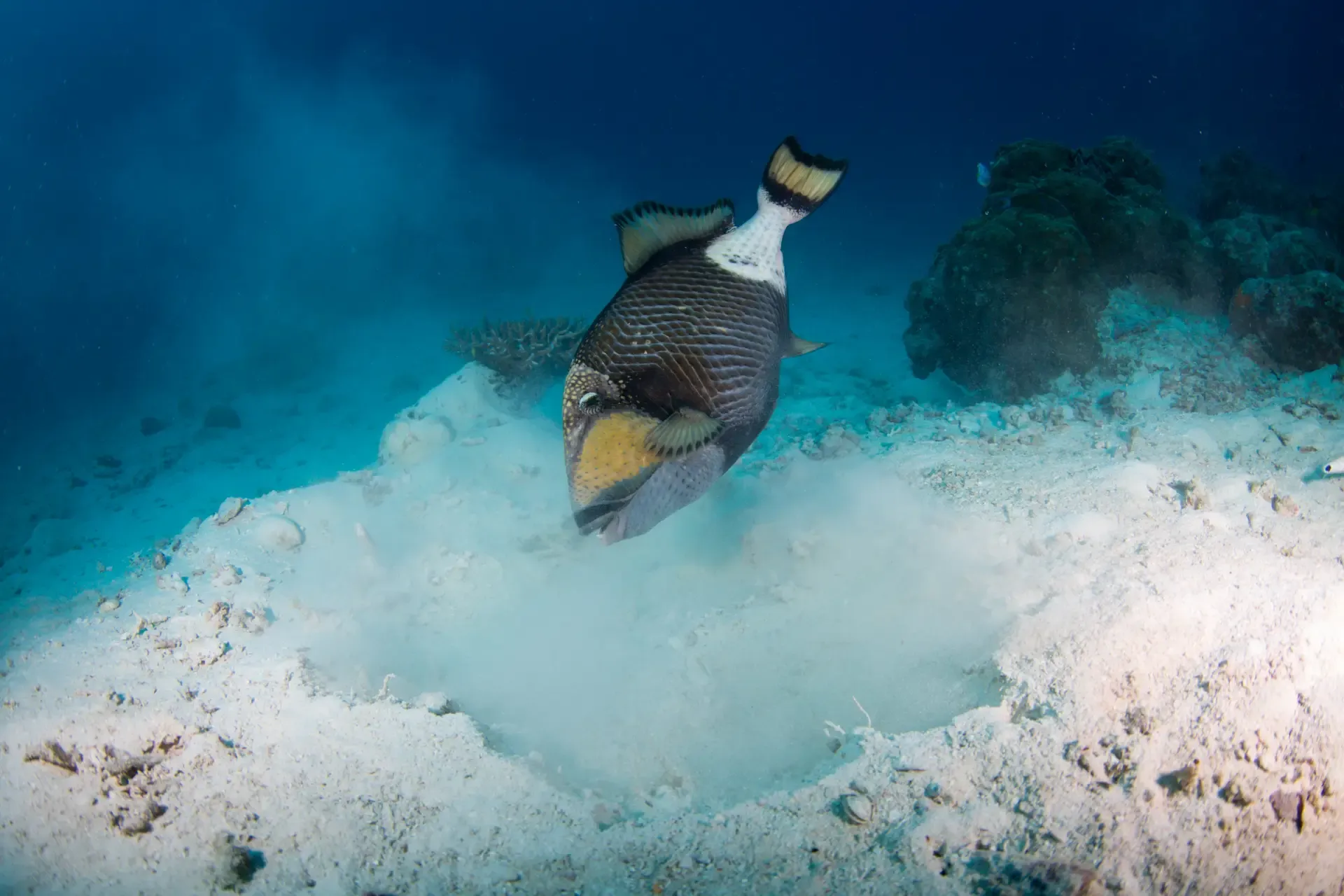
Boracay’s vibrant coral reefs are home to an incredible variety of marine life, from tiny nudibranchs to graceful sea turtles. Among the many fascinating creatures that inhabit these waters, one fish commands attention like no other—the Titan Triggerfish (Balistoides viridescens). Known for its striking appearance, territorial nature, and critical role in maintaining the reef ecosystem, the Titan Triggerfish is one of Boracay’s most intriguing marine residents.

For divers, encountering a Titan Triggerfish can be both exciting and intimidating. Understanding their behavior, where to find them, and how to interact with them safely can enhance your diving experience in Boracay. Let’s take a closer look at this fascinating reef guardian.


What is a Titan Triggerfish?

The Titan Triggerfish is the largest of the triggerfish species, easily recognized by its robust body, tough scales, and powerful beak-like teeth. These fish are not just reef inhabitants—they are active ecosystem managers, playing a vital role in shaping and maintaining coral reefs.

Key Features of the Titan Triggerfish:

  • Size: Can grow up to 75 cm (30 inches) long.
  • Coloration: A mix of yellow, brown, green, and black with intricate markings.
  • Body Shape: Deep, oval body with a powerful jaw designed for crushing hard coral, shells, and crustaceans.
  • Eyes: Located high on their head, allowing them to monitor their surroundings while feeding.
  • Dorsal “Trigger” Spine: Can be raised or locked in place to deter predators and protect their territory.

While Titan Triggerfish are often admired for their beauty, they are best known for their territorial behavior, particularly during their nesting season.


Why Titan Triggerfish are Called Reef Guardians

Titan Triggerfish play a crucial role in reef maintenance. While their powerful jaws and aggressive feeding habits might seem destructive, their actions actually benefit the coral ecosystem in multiple ways.

How Titan Triggerfish Help the Reef:

✔️ Clearing Algae and Coral Debris: Titan Triggerfish dig into the reef, removing excessive algae and preventing coral overgrowth.
✔️ Aerating the Seafloor: Their digging behavior helps oxygenate the sand and create space for other marine organisms.
✔️ Controlling Invertebrate Populations: By feeding on sea urchins, crustaceans, and mollusks, they help maintain a balanced ecosystem.

Despite their aggressive reputation, Titan Triggerfish are essential to reef health, making them a valuable part of Boracay’s marine ecosystem.


Where to Find Titan Triggerfish in Boracay

Titan Triggerfish are found in many of Boracay’s dive sites, particularly in areas with sandy patches and healthy coral formations. They often patrol their territories and can be seen searching for food or defending their nests.

Top Dive Sites to Spot Titan Triggerfish:

📍 Virgin Drop – A deep reef with sandy patches where Titan Triggerfish often dig for food.

📍 Punta Bunga – Known for its mix of coral structures and sandy areas, making it a prime location for territorial triggerfish.

📍 Channel Drift – The strong currents bring plenty of food sources, attracting Titan Triggerfish along with schools of other reef fish.

📍 Tambisaan Reef – A diverse dive site where triggerfish are commonly seen among coral heads.

📍 Yapak – While mostly known for pelagic species, Titan Triggerfish can sometimes be spotted near the reef sections.

Divers are most likely to encounter Titan Triggerfish in these areas, but during the breeding season (typically April to September), their presence becomes even more noticeable.


Understanding Titan Triggerfish Behavior

While Titan Triggerfish are not naturally aggressive, they can become territorial when protecting their nests. Recognizing the signs of a defensive triggerfish can help divers avoid unwanted confrontations.

Common Titan Triggerfish Behaviors:

✔️ Feeding: You may see them digging into the sand or biting at coral, often accompanied by a cloud of debris.
✔️ Territorial Display: If a triggerfish flares its fins, raises its dorsal spine, or swims in a tight circular motion, it is defending its territory.
✔️ Charging Motion: A Titan Triggerfish may swim directly toward a diver if it feels threatened, often as a warning.
✔️ Nesting: During the breeding season, female triggerfish aggressively protect their eggs, which are laid in circular nests on the sandy seafloor.

Titan Triggerfish do not attack unprovoked, but they will defend their nests fiercely. Understanding their body language is key to safe and enjoyable encounters.


How to Safely Dive with Titan Triggerfish

Encounters with Titan Triggerfish can be thrilling, but it’s important to respect their space and follow proper diving etiquette. Here are some key tips for safely diving with these fascinating fish:

1. Be Aware of Their Nesting Territory

  • Titan Triggerfish defend their nests in a cone-shaped territory extending upwards from the seafloor.
  • If you see a Titan Triggerfish guarding an area, swim horizontally away rather than upwards, as ascending might bring you deeper into its defensive zone.

2. Maintain a Safe Distance

  • Observe from a respectful distance, especially if the fish appears agitated or defensive.
  • Do not attempt to chase, touch, or provoke the fish.

3. Watch for Warning Signs

  • If a Titan Triggerfish raises its dorsal spine or swims erratically, it is signaling that you are too close.
  • A direct charge is a sign that you should move away calmly and quickly.

4. Keep Your Hands Close to Your Body

  • Avoid making sudden hand movements that might be perceived as a threat.
  • Keep your dive gear and camera equipment secured to prevent accidental disturbances.

5. Let Your Dive Guide Lead the Way

  • Diving with an experienced guide from New Wave Divers Boracay ensures you have expert insight into marine life behavior.
  • Our guides know how to navigate dive sites while avoiding territorial areas of Titan Triggerfish.

By following these guidelines, divers can safely enjoy observing Titan Triggerfish without disturbing them or triggering defensive behavior.


Final Thoughts: Respecting the Guardians of the Reef

Titan Triggerfish are among the most dynamic and essential species in Boracay’s marine ecosystem. Their role in maintaining reef health, clearing algae, and controlling invertebrate populations makes them vital reef guardians.

For divers, these fish offer an exciting and memorable underwater encounter. Whether you observe them feeding, patrolling their territory, or defending their nests, Titan Triggerfish are a fascinating reminder of the complex interactions that sustain the reef ecosystem.

At New Wave Divers Boracay, we believe in responsible and respectful diving, ensuring that both divers and marine life can thrive together. If you’re ready to explore Boracay’s reefs and witness the incredible behavior of Titan Triggerfish firsthand, book a dive with us today!


Wish to know more about the diving in Boracay? Our team will be delighted to answer your questions and let us know why we should be your first choice when planning your dive vacation to the Philippines. We hope to hear from you soon!
Contact Us

Continue reading

divemaster boracay

Becoming a Divemaster in Boracay: What to Expect from the Journey

Becoming a Divemaster in Boracay

Becoming a Divemaster in Boracay: What to Expect from the Journey

For many scuba divers, the Divemaster course is the first step toward becoming a dive professional. It’s more than just an advanced certification—it’s a transformation from recreational diver to leader, mentor, and ocean ambassador. And what better place to embark on this journey than Boracay, one of the Philippines’ most beautiful and dynamic dive destinations?

Becoming a PADI Divemaster in Boracay with New Wave Divers means immersing yourself in stunning tropical waters, world-class dive sites, and a vibrant diving community. Whether you’re looking to gain experience before becoming an instructor, work in the dive industry, or simply become a highly skilled diver, this course will push your limits, build confidence, and deepen your love for the ocean.

Here’s what you can expect from the journey to becoming a Divemaster in Boracay.


Why Choose Boracay for Your Divemaster Training?

🏝️ Diverse Dive Sites: From shallow reefs for training to deep walls at Yapak, Boracay offers a range of dive environments that help develop well-rounded Divemasters.

🌞 Year-Round Diving: With warm tropical waters ranging from 26-30°C (79-86°F) and good visibility most of the year, Boracay is an excellent place to train in different conditions.

🌊 Real-World Experience: Since Boracay is a popular dive destination, you’ll get hands-on experience working with certified divers, students, and instructors—preparing you for a professional diving career.

🤿 Amazing Marine Life: From whitetip reef sharks at Yapak to blue-spotted stingrays and macro creatures at Crocodile Island, Boracay is rich in marine biodiversity, making every dive exciting.

👥 A Supportive Dive Community: Training with New Wave Divers Boracay means joining a tight-knit dive shop where you’ll learn from experienced PADI Instructors and work alongside passionate divers.

Whether you plan to travel and work as a dive pro, become a PADI Instructor, or simply level up your diving skills, Boracay provides the perfect environment to grow and thrive as a Divemaster.


What to Expect in the Divemaster Course

The PADI Divemaster course is an intensive training program that prepares you to lead certified divers, assist instructors, and develop professional-level dive skills.

⏳ Course Duration: Typically 4-8 weeks, depending on your schedule and previous experience.

1. Mastering Your Dive Skills & Stamina

Skill Demonstration: You’ll need to perfect and demonstrate all 24 basic dive skills to demonstration quality—this means being able to teach them clearly to beginner divers.

Swimming & Stamina Tests: Get ready for timed swims, treading water exercises, and underwater problem-solving. These physical challenges ensure you have the endurance and confidence to handle real-world dive scenarios.

Rescue Diver Skills: As a Divemaster, you must be able to handle emergencies, assist distressed divers, and prevent problems before they happen. You’ll practice scenarios like rescuing an unconscious diver and towing a tired diver to safety.

💡 Why This Matters: These skills sharpen your confidence and control underwater, preparing you to handle any situation.


2. Learning to Lead & Guide Certified Divers

A Divemaster isn’t just a skilled diver—they’re a leader. During training, you’ll:

Learn to plan and lead fun dives—including drift dives, deep dives, and wreck dives.
Improve navigation skills—so you can safely guide divers at sites like Camia II Wreck and Channel Drift.
Handle different diver skill levels—some divers need more attention, while others want to explore freely. You’ll learn to adapt and guide all types of divers.

💡 Why This Matters: Being able to lead a dive safely and make it enjoyable is one of the most important skills a Divemaster must master.


3. Assisting with Dive Courses & Student Training

Divemasters often work closely with instructors, assisting in Open Water, Advanced, and specialty courses.

Work with real students—helping with skills like buoyancy control, mask clearing, and finning techniques.
Learn how to organize dive logistics—including boat briefings, dive site planning, and safety procedures.
Assist with training sessions in confined and open water—gaining hands-on experience in teaching and diver supervision.

💡 Why This Matters: Many Divemasters go on to become PADI Instructors, and this hands-on experience is crucial preparation for teaching certification courses.


4. Understanding Dive Theory & the Business of Diving

As a professional, you need to know more than just how to dive—you’ll also study:

📘 Dive physics & physiology—how pressure, depth, and gases affect the body.
📘 Decompression theory & dive planning—to understand how to prevent decompression sickness.
📘 Equipment maintenance & repair—essential for keeping dive gear in top shape.
📘 Dive shop operations & customer service—learning the business side of the dive industry.

💡 Why This Matters: Understanding the science and business of diving makes you a better dive leader and a valuable asset to any dive shop.


What Happens After You Become a Divemaster?

Once you complete your Divemaster training, you’ll officially be a PADI professional, able to:

✔️ Guide certified divers on fun dives.
✔️ Assist instructors in training new divers.
✔️ Conduct refresher courses and snorkel tours.
✔️ Work anywhere in the world as a dive professional!

For those looking to go further, the next step is the PADI Instructor Development Course (IDC)—the gateway to becoming a PADI Open Water Scuba Instructor (OWSI). Many Divemasters go on to teach diving full-time and travel the world.


Why Train with New Wave Divers in Boracay?

Choosing the right dive shop for your Divemaster training is just as important as the course itself. At New Wave Divers Boracay, we offer:

🏝️ World-Class Dive Training – Experienced PADI Instructors who provide personalized training and mentorship.
🌊 Hands-On Experience – Work with real students and certified divers to build confidence and leadership skills.
🌟 Diverse Dive Sites – Train in a variety of environments, from shallow reefs to deep walls.
🤿 Career Development – Guidance for those looking to continue to Instructor level or work in the dive industry.


Final Thoughts: Is Becoming a Divemaster in Boracay Right for You?

If you’re ready to take your diving to the next level, develop leadership skills, and immerse yourself in the dive lifestyle, becoming a Divemaster in Boracay is the perfect opportunity.

At New Wave Divers Boracay, we offer structured, hands-on Divemaster training in one of the most stunning dive destinations in the world. Whether you’re looking to start a career in diving or just want to push your limits, this course will challenge, inspire, and transform you into a true dive professional.

Ready to start your Divemaster journey? Contact New Wave Divers today and take the plunge into professional diving!


Wish to know more about the diving in Boracay? Our team will be delighted to answer your questions and let us know why we should be your first choice when planning your dive vacation to the Philippines. We hope to hear from you soon!
Contact Us

Continue reading

boracay march

Best Reasons to Dive in Boracay in March

Best Reasons to Dive in Boracay in March

Best Reasons to Dive in Boracay in March

March is one of the best months for diving in Boracay, offering near-perfect conditions, incredible marine life encounters, and fewer crowds compared to peak holiday months. Whether you’re looking for crystal-clear visibility, comfortable water temperatures, or unique marine life sightings, March has it all.

If you’ve been considering a dive trip to Boracay, here’s why March is the perfect time to experience the island’s world-class diving with New Wave Divers.


1. Ideal Weather & Water Conditions

March marks the tail end of the dry season (Amihan season) in Boracay, bringing stable weather, light winds, and calm seas—perfect for diving.

☀️ Air Temperature: Around 28–32°C (82–90°F)
🌊 Water Temperature: 26–29°C (79–84°F)—warm and comfortable for diving
🔵 Visibility: Typically 20–30 meters (65–100 feet), with some dive sites reaching 40 meters (130 feet)

With less rain and minimal storm activity, the sea conditions in March are exceptional, making it an excellent time for both beginner and advanced divers.

💡 Why This Matters:

  • Calmer waters mean easier boat rides to sites like Yapak and Maniguin Island.
  • Less plankton in the water means clearer visibility for spotting marine life.
  • Great conditions for underwater photography, with vibrant coral reefs and natural light penetration.

2. Thriving Marine Life in March

March is an exciting time for marine life in Boracay, with plenty of fish activity, reef interactions, and occasional sightings of larger pelagics. Some of the most fascinating species to spot include:

🐠 Shoals of Reef Fish at Crocodile Island & Angol Point

  • March sees large schools of fusiliers, butterflyfish, and snappers actively feeding.
  • Perfect for macro lovers, as nudibranchs and crustaceans emerge from their hiding spots.

🦈 Possible Whitetip Reef Shark Sightings at Yapak

  • March is one of the better months for whitetip reef shark encounters at Yapak’s deep walls.
  • These sharks are often seen resting in crevices or patrolling the reef.

🦅 Eagle Rays Spotted at Maniguin Island

  • This is a great time for pelagic species, and eagle rays are sometimes seen gliding through the blue.
  • Maniguin’s deep drop-offs and remote location make it a must-visit for adventurous divers.

🐡 Blue-Spotted Stingrays & Ribbontail Rays in the Shallows

  • March’s clear waters make it easier to spot stingrays camouflaging in sandy areas at Tambisaan Reef & Crocodile Island.

March is also a prime time for drift diving, as mild currents bring in schools of jacks, barracudas, and trevallies—an exciting experience for divers looking for dynamic underwater encounters.


3. Fewer Crowds = More Peaceful Diving

While Boracay is popular year-round, March is quieter than peak season months like December and January.

Why this is great for divers:
Less crowded dive sites mean more relaxed dives with better marine life interactions.
Easier booking availability for dive trips, courses, and accommodations.
Smaller dive groups = more personalized attention from instructors and dive guides.

If you love having the reef (almost) to yourself, March is one of the best times to experience Boracay’s underwater beauty without the usual high-season rush.


4. The Perfect Time for Dive Training & Specialty Courses

If you’ve been thinking about getting certified or leveling up your dive skills, March is an ideal time to take a PADI course in Boracay.

💡 Best Courses to Take in March:
✔️ Open Water Diver Course – Learn to dive in calm, clear conditions—perfect for beginners!
✔️ Advanced Open Water Diver Course – March’s great visibility and deep sites make it a fantastic time for adventure dives like deep diving at Yapak or drift diving at Channel Drift.
✔️ PADI Wreck Diver Specialty – Explore the Camia II Wreck, one of Boracay’s best artificial reefs, covered in thriving marine life.
✔️ PADI Shark Conservation Course – Learn more about shark behavior and conservation efforts, especially if you’re lucky enough to spot a whitetip reef shark.

March offers perfect water conditions for training dives, helping students feel more comfortable and confident underwater.


5. Exciting Day Trips & Diving Safaris

Because March has calm seas and long daylight hours, it’s an excellent time for full-day dive excursions.

🌴 Top Dive Day Trips in March:
🚤 Maniguin Island – Remote reefs, eagle rays, sharks, and incredible visibility (only available as a full-day trip).
🚤 Balinghai & Punta Bunga – Great for seeing turtles, triggerfish, and stunning coral formations.
🚤 Exploring Yapak Deep Walls – For experienced divers looking for big fish action.

New Wave Divers Boracay offers special dive safaris during March, perfect for divers looking to make the most of their trip.


6. The Best Time to Experience Boracay Above the Surface

Diving in March isn’t just about what’s happening underwater—it’s also the perfect time to enjoy everything else Boracay has to offer:

☀️ White Beach is at its most beautiful, with calm waters and warm sunshine.
🚣 Paddleboarding & Freediving conditions are ideal, thanks to minimal waves.
🎉 Local Festivals & Events – March often features live music, beach parties, and cultural celebrations.

For divers traveling with non-diving friends or family, Boracay offers plenty of activities for everyone to enjoy!


Final Thoughts: Why March is a Must-Visit Month for Diving in Boracay

March is one of the best times to dive in Boracay, offering:

Excellent visibility and calm conditions for all levels of divers.
Thriving marine life, from whitetip reef sharks at Yapak to stingrays in shallow reefs.
Fewer crowds, making for more relaxed and enjoyable dives.
Perfect conditions for dive training and certification courses.
Ideal weather for diving safaris and full-day dive trips.

At New Wave Divers Boracay, we offer guided dives, PADI courses, and exclusive dive safaris to help you make the most of your March dive adventure. Whether you’re a first-time diver or a seasoned explorer, we’re here to show you the best of Boracay’s underwater world.

Ready to dive in March? Contact us today to book your Boracay dive trip!


Wish to know more about the diving in Boracay? Our team will be delighted to answer your questions and let us know why we should be your first choice when planning your dive vacation to the Philippines. We hope to hear from you soon!
Contact Us

Continue reading

blue spotted ray boracay

The Rays of Boracay: Majestic Gliders of the Deep

The Rays of Boracay: Majestic Gliders of the Deep

The Rays of Boracay: Majestic Gliders of the Deep

Beneath Boracay’s crystal-clear waters lies an extraordinary world filled with vibrant reefs, fascinating marine life, and graceful, winged creatures gliding effortlessly through the blue—rays. These elegant fish, closely related to sharks, captivate divers with their sleek movements, unique patterns, and fascinating behaviors. From the small but striking blue-spotted stingrays to the majestic eagle rays that soar through deep water, Boracay’s dive sites offer fantastic opportunities to observe these underwater marvels.

Whether you’re a macro enthusiast searching for hidden stingrays or an adventure-seeking diver hoping to spot an eagle ray at depth, Boracay provides the perfect setting to witness these creatures in their natural habitat. Let’s dive into the different types of rays found in Boracay, where to see them, and why they play an essential role in the ocean’s ecosystem.


Meet the Rays of Boracay

1. Blue-Spotted Stingray (Neotrygon kuhlii)

🔵 Best Places to See Them: Santoson, Tambisaan Reef, Laguna, Crocodile Island
🔵 Size: Up to 35 cm (14 inches) in disc width
🔵 Depth Range: 5–30 meters (16–98 feet)

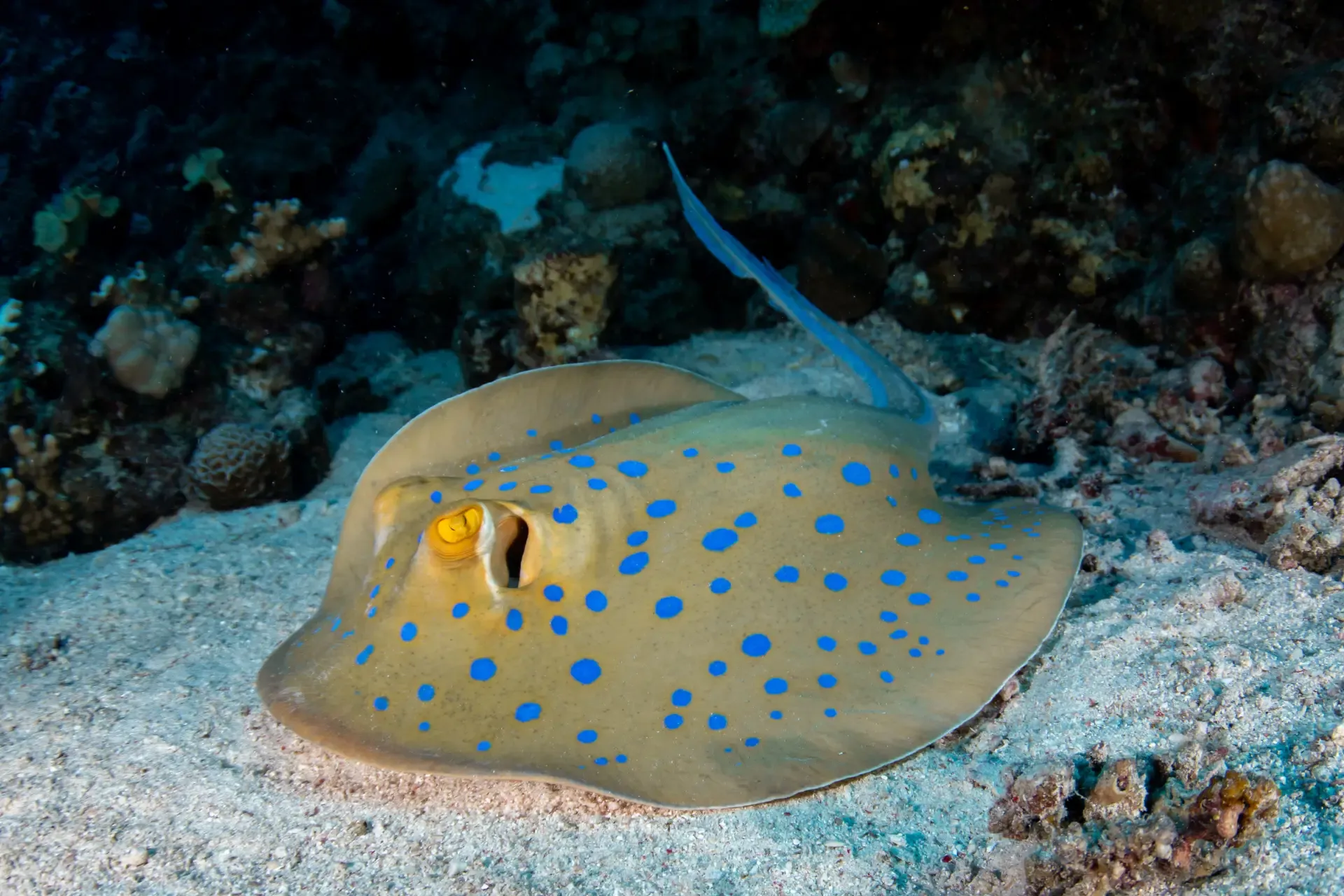
The blue-spotted stingray is one of Boracay’s most commonly sighted rays. These small but striking creatures feature bright blue spots on a sandy-colored body, making them easy to identify. Often found resting on sandy seabeds or partially hidden under coral ledges, they rely on camouflage to stay safe from predators.

💡 Fun Fact: When startled, they quickly dart away, stirring up sand as they vanish into the reef.

💡 Diver Tip: Look for them in shallow reef areas like Crocodile Island, where they often settle on the seabed between coral formations.


blue spotted ray boracay

2. Blue-Spotted Ribbontail Ray (Taeniura lymma)

🌊 Best Places to See Them: Crocodile Island, Camia II Wreck, Channel Drift
🌊 Size: Up to 35 cm (14 inches) in disc width
🌊 Depth Range: 3–25 meters (10–82 feet)

Closely related to the blue-spotted stingray, the blue-spotted ribbontail ray is slightly larger and more vibrant, with an electric-blue tail and a more rounded body shape. These rays are more shy and reclusive, preferring to hide under rocky outcrops or coral formations.

💡 Diver Tip: When diving at Channel Drift, keep an eye on the sandy patches where these rays rest between coral heads.


3. Marble Ray (Taeniurops meyeni) (Rare Sightings)

Best Places to See Them: Yapak, Punta Bunga
Size: Can reach up to 3 meters (10 feet) in width
Depth Range: 30–60 meters (98–197 feet)

The marble ray, also known as the black-blotched stingray, is one of the largest stingrays found in the Indo-Pacific. Unlike smaller stingrays, these giants are powerful swimmers and prefer deeper waters. They are rare in Boracay, but experienced divers venturing into deep-wall dive sites like Yapak may be lucky enough to see one.

💡 Fun Fact: Marble rays have a long, venomous tail spine that serves as a defense mechanism against predators.

💡 Diver Tip: To increase your chances of spotting one, drift dive along the deep walls of Yapak and scan the sandy seabed below.


eagle ray boracay

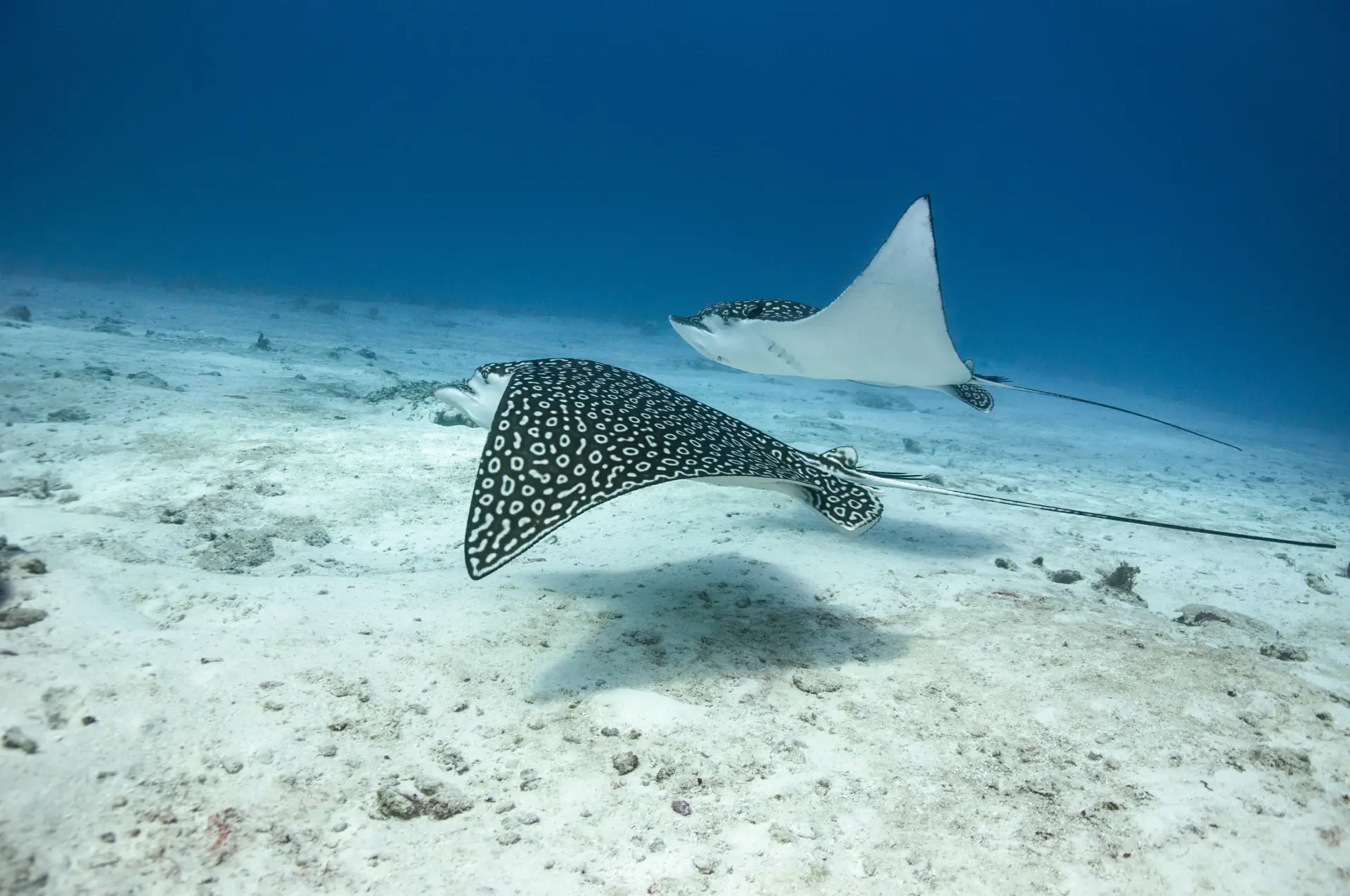
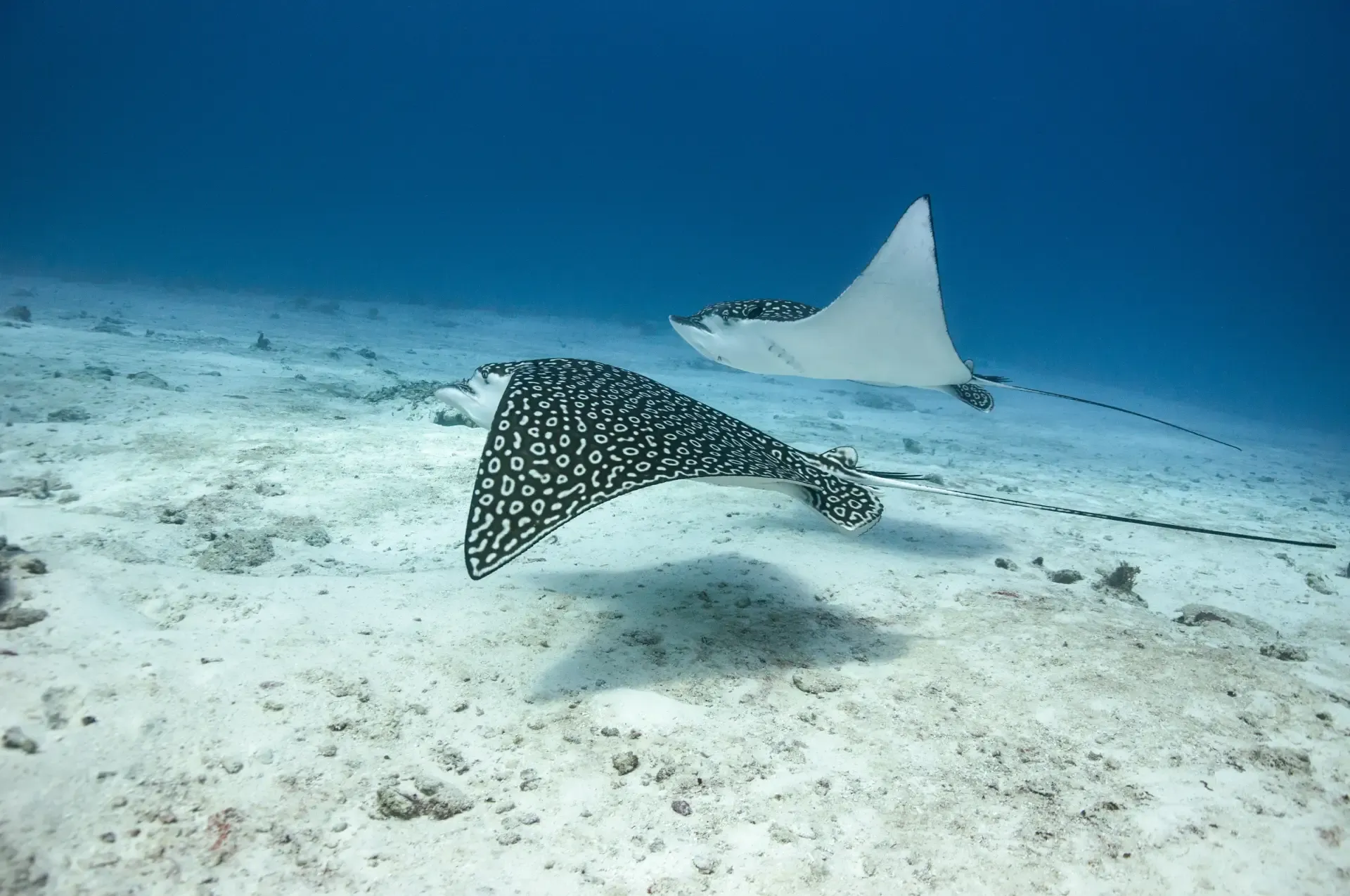
4. Eagle Ray (Aetobatus narinari) (Occasional Sightings)

🦅 Best Places to See Them: Maniguin Island, Yapak
🦅 Size: Can grow up to 3 meters (10 feet) in wingspan
🦅 Depth Range: 10–50 meters (33–164 feet)

The eagle ray is one of the most mesmerizing rays to witness underwater. Unlike stingrays, which tend to rest on the seabed, eagle rays are active swimmers, often seen soaring gracefully through the open ocean. They have a distinctive spotted dorsal pattern and a whip-like tail, making them easy to identify.

💡 Fun Fact: Eagle rays use their strong jaws to crush and eat crustaceans, mollusks, and small fish.

💡 Diver Tip: Eagle rays love open, deep-water environments, so keep an eye out in the blue while diving at Yapak or Maniguin Island.


manta ray philippines

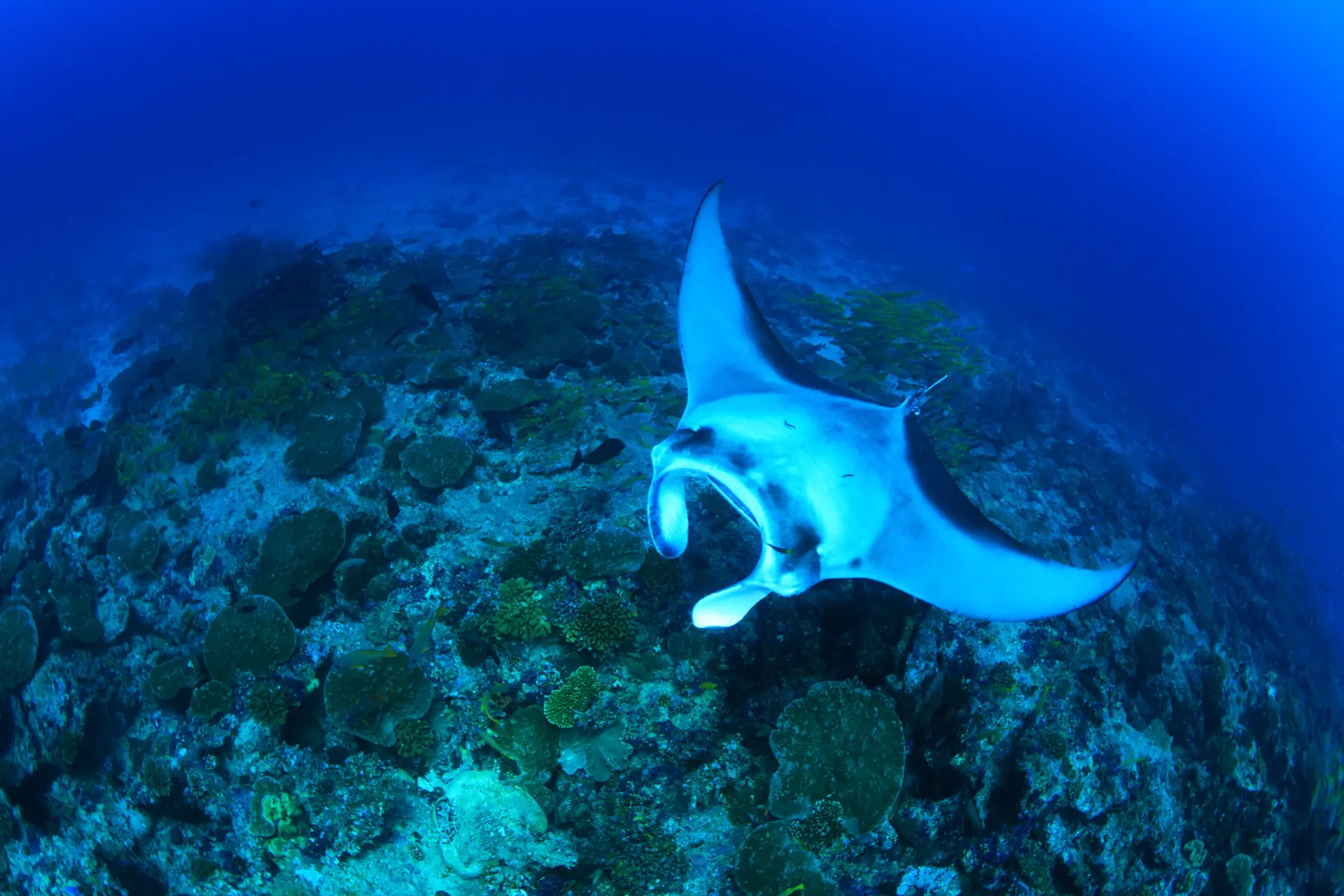
5. Manta Ray (Mobula alfredi) (Rare in Boracay, Common in Nearby Destinations)

Best Places to See Them: Ticao Pass (Masbate), Tubbataha Reefs, Apo Reef
Size: Can reach up to 5.5 meters (18 feet) in wingspan
Depth Range: 10–40 meters (33–131 feet)

While manta rays are not commonly seen in Boracay, divers hoping to see these gentle giants can take trips to Ticao Pass or Tubbataha Reefs, where cleaning stations attract mantas in large numbers. Manta rays are filter feeders, gracefully gliding through the water as they consume plankton with their wide, open mouths.

💡 Diver Tip: If you’re looking to swim with mantas, plan a trip to nearby Ticao Pass or Tubbataha, where sightings are much more common.


Why Are Rays Important to Boracay’s Marine Ecosystem?

Rays play a critical role in maintaining ocean health by:

Regulating prey populations – Rays help control populations of crustaceans, mollusks, and small fish, keeping marine food webs balanced.
Contributing to seafloor health – As bottom-dwellers, stingrays stir up sediment, which aids in nutrient cycling for smaller organisms.
Supporting coral reefs – Eagle rays and mantas often travel between reef systems, helping spread nutrients across large areas.

Protecting rays is crucial for keeping Boracay’s waters healthy and ensuring sustainable diving experiences for future generations.


Where to See Rays While Diving in Boracay

If you want to increase your chances of spotting rays, here are the best dive sites to visit:

📍 Crocodile Island – Best for blue-spotted stingrays and ribbontail rays.
📍 Channel Drift – Occasionally spotted rays resting on sandy bottoms.
📍 Tambisaan Reef – A great spot for shallow-water stingrays.
📍 YapakEagle rays and marble rays are sometimes seen in deeper sections.
📍 Maniguin Island – One of the best places for occasional eagle ray encounters.


Final Thoughts: The Majesty of Rays in Boracay

Whether gliding through the blue or resting on the sandy seabed, rays are some of the most fascinating marine creatures a diver can encounter. Boracay offers diverse opportunities to observe different species, from the small and colorful blue-spotted stingray to the majestic eagle ray patrolling deep waters.

At New Wave Divers Boracay, we offer guided dives to the best ray-spotting locations, ensuring you get the most out of your underwater adventure.

Ready to dive with Boracay’s most graceful marine creatures? Book your dive with New Wave Divers today!


Wish to know more about the diving in Boracay? Our team will be delighted to answer your questions and let us know why we should be your first choice when planning your dive vacation to the Philippines. We hope to hear from you soon!
Contact Us

Continue reading

Get 10% OFF Your Dive On Cash Payment
This is default text for notification bar