Author: Scuba Dive Marketing

divemaster boracay

Becoming a Divemaster in Boracay: What to Expect from the Journey

Becoming a Divemaster in Boracay

Becoming a Divemaster in Boracay: What to Expect from the Journey

For many scuba divers, the Divemaster course is the first step toward becoming a dive professional. It’s more than just an advanced certification—it’s a transformation from recreational diver to leader, mentor, and ocean ambassador. And what better place to embark on this journey than Boracay, one of the Philippines’ most beautiful and dynamic dive destinations?

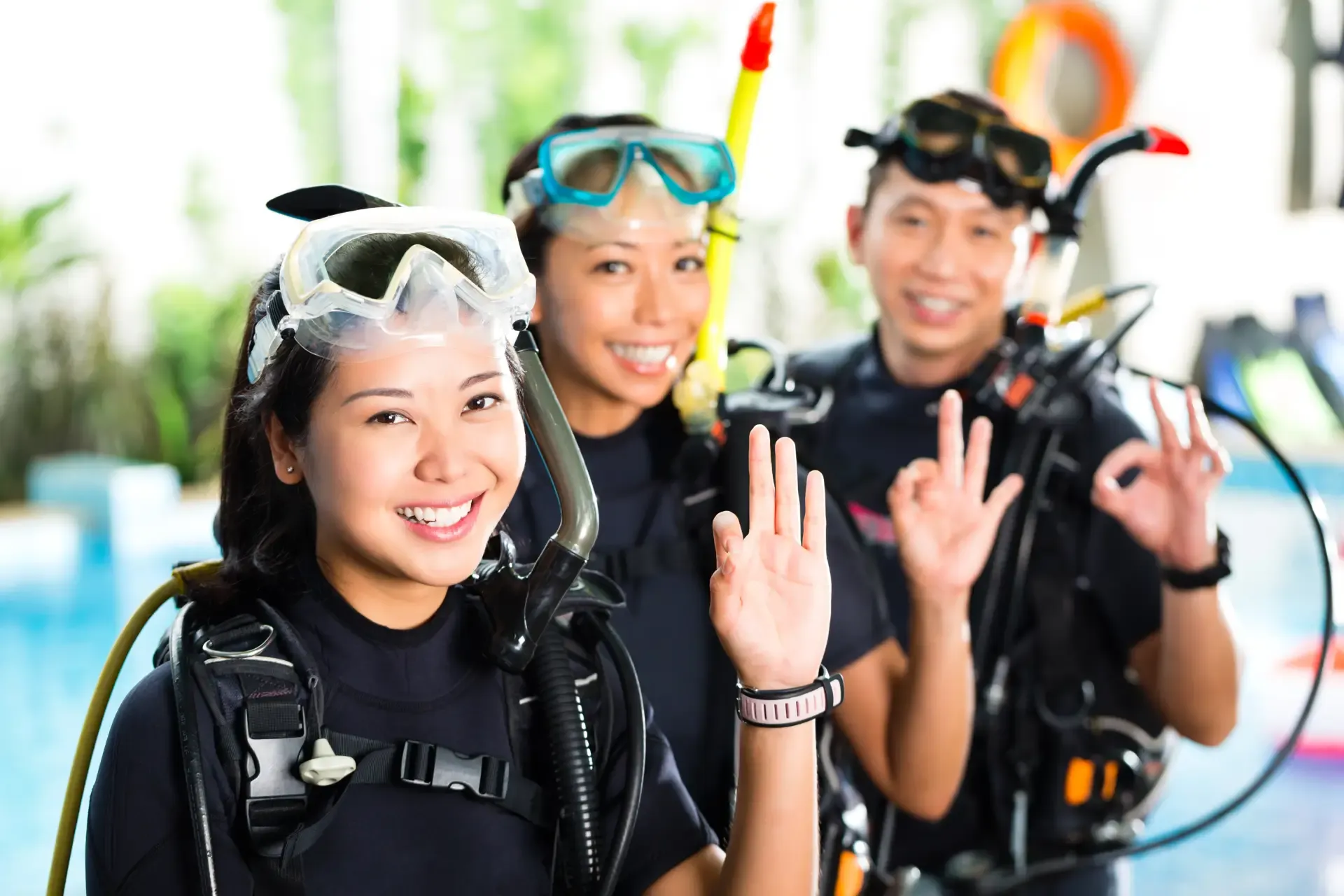
Becoming a PADI Divemaster in Boracay with New Wave Divers means immersing yourself in stunning tropical waters, world-class dive sites, and a vibrant diving community. Whether you’re looking to gain experience before becoming an instructor, work in the dive industry, or simply become a highly skilled diver, this course will push your limits, build confidence, and deepen your love for the ocean.

Here’s what you can expect from the journey to becoming a Divemaster in Boracay.


Why Choose Boracay for Your Divemaster Training?

🏝️ Diverse Dive Sites: From shallow reefs for training to deep walls at Yapak, Boracay offers a range of dive environments that help develop well-rounded Divemasters.

🌞 Year-Round Diving: With warm tropical waters ranging from 26-30°C (79-86°F) and good visibility most of the year, Boracay is an excellent place to train in different conditions.

🌊 Real-World Experience: Since Boracay is a popular dive destination, you’ll get hands-on experience working with certified divers, students, and instructors—preparing you for a professional diving career.

🤿 Amazing Marine Life: From whitetip reef sharks at Yapak to blue-spotted stingrays and macro creatures at Crocodile Island, Boracay is rich in marine biodiversity, making every dive exciting.

👥 A Supportive Dive Community: Training with New Wave Divers Boracay means joining a tight-knit dive shop where you’ll learn from experienced PADI Instructors and work alongside passionate divers.

Whether you plan to travel and work as a dive pro, become a PADI Instructor, or simply level up your diving skills, Boracay provides the perfect environment to grow and thrive as a Divemaster.


What to Expect in the Divemaster Course

The PADI Divemaster course is an intensive training program that prepares you to lead certified divers, assist instructors, and develop professional-level dive skills.

⏳ Course Duration: Typically 4-8 weeks, depending on your schedule and previous experience.

1. Mastering Your Dive Skills & Stamina

Skill Demonstration: You’ll need to perfect and demonstrate all 24 basic dive skills to demonstration quality—this means being able to teach them clearly to beginner divers.

Swimming & Stamina Tests: Get ready for timed swims, treading water exercises, and underwater problem-solving. These physical challenges ensure you have the endurance and confidence to handle real-world dive scenarios.

Rescue Diver Skills: As a Divemaster, you must be able to handle emergencies, assist distressed divers, and prevent problems before they happen. You’ll practice scenarios like rescuing an unconscious diver and towing a tired diver to safety.

💡 Why This Matters: These skills sharpen your confidence and control underwater, preparing you to handle any situation.


2. Learning to Lead & Guide Certified Divers

A Divemaster isn’t just a skilled diver—they’re a leader. During training, you’ll:

Learn to plan and lead fun dives—including drift dives, deep dives, and wreck dives.
Improve navigation skills—so you can safely guide divers at sites like Camia II Wreck and Channel Drift.
Handle different diver skill levels—some divers need more attention, while others want to explore freely. You’ll learn to adapt and guide all types of divers.

💡 Why This Matters: Being able to lead a dive safely and make it enjoyable is one of the most important skills a Divemaster must master.


3. Assisting with Dive Courses & Student Training

Divemasters often work closely with instructors, assisting in Open Water, Advanced, and specialty courses.

Work with real students—helping with skills like buoyancy control, mask clearing, and finning techniques.
Learn how to organize dive logistics—including boat briefings, dive site planning, and safety procedures.
Assist with training sessions in confined and open water—gaining hands-on experience in teaching and diver supervision.

💡 Why This Matters: Many Divemasters go on to become PADI Instructors, and this hands-on experience is crucial preparation for teaching certification courses.


4. Understanding Dive Theory & the Business of Diving

As a professional, you need to know more than just how to dive—you’ll also study:

📘 Dive physics & physiology—how pressure, depth, and gases affect the body.
📘 Decompression theory & dive planning—to understand how to prevent decompression sickness.
📘 Equipment maintenance & repair—essential for keeping dive gear in top shape.
📘 Dive shop operations & customer service—learning the business side of the dive industry.

💡 Why This Matters: Understanding the science and business of diving makes you a better dive leader and a valuable asset to any dive shop.


What Happens After You Become a Divemaster?

Once you complete your Divemaster training, you’ll officially be a PADI professional, able to:

✔️ Guide certified divers on fun dives.
✔️ Assist instructors in training new divers.
✔️ Conduct refresher courses and snorkel tours.
✔️ Work anywhere in the world as a dive professional!

For those looking to go further, the next step is the PADI Instructor Development Course (IDC)—the gateway to becoming a PADI Open Water Scuba Instructor (OWSI). Many Divemasters go on to teach diving full-time and travel the world.


Why Train with New Wave Divers in Boracay?

Choosing the right dive shop for your Divemaster training is just as important as the course itself. At New Wave Divers Boracay, we offer:

🏝️ World-Class Dive Training – Experienced PADI Instructors who provide personalized training and mentorship.
🌊 Hands-On Experience – Work with real students and certified divers to build confidence and leadership skills.
🌟 Diverse Dive Sites – Train in a variety of environments, from shallow reefs to deep walls.
🤿 Career Development – Guidance for those looking to continue to Instructor level or work in the dive industry.


Final Thoughts: Is Becoming a Divemaster in Boracay Right for You?

If you’re ready to take your diving to the next level, develop leadership skills, and immerse yourself in the dive lifestyle, becoming a Divemaster in Boracay is the perfect opportunity.

At New Wave Divers Boracay, we offer structured, hands-on Divemaster training in one of the most stunning dive destinations in the world. Whether you’re looking to start a career in diving or just want to push your limits, this course will challenge, inspire, and transform you into a true dive professional.

Ready to start your Divemaster journey? Contact New Wave Divers today and take the plunge into professional diving!


Wish to know more about the diving in Boracay? Our team will be delighted to answer your questions and let us know why we should be your first choice when planning your dive vacation to the Philippines. We hope to hear from you soon!

Contact Us

Continue reading

03/19/2025 Dive Log – Punta Bunga

Dive Log: 03/19/2025

Dive Site Name: Punta Bunga

Dive Depth: 30 meters

Dive Duration: 38 minutes

About The Dive: A very enjoyable deep dive where we had the chance to encounter a white tip reef shark resting on the edge of the wall, a shy blue spotted stingray in the sandy area and an octopus camouflaged over the top of the reef!
Everybody enjoyed this dive having a slight current to drift along the wall!

03/18/2025 Dive Log – Diniwid

Dive Log: 03/18/2025

Dive Site Name: Diniwid

Dive Depth: 18 meters

Dive Duration: 43 minutes

About The Dive: Had a great dive this morning with my guest, first we saw a moray eel, then I saw a green turtle on the edge of the wall, she was very relaxed that she was not afraid of us around her, stayed for few minutes then continued our dive, a black frog fish said hello to us, for our finaly we saw a zebra moray, they where very happy with our dive

03/17/2025 Dive Log – DINIWID

Dive Log: 03/17/2025

Dive Site Name: DINIWID

Dive Depth: 20 meters

Dive Duration: 47 minutes

About The Dive: We had an enjoyable drift dive starting in Balinghai ending in Diniwid with enough current to enjoy the shallow wall and the coral patches in the deeper part of the dive site.
A yellow eyed moray eel and a trigger fish were having a dispute over who will be the one owning the tiny space under a big brain coral.
A well comuflaged hawksbill turtle got our eye while feeding on some hard corals.
A school of fusiliers accompanied us during our safety stop making it colourful and entertaining !

03/16/2025 Dive Log – FRIDAY’S REEF

Dive Log: 03/16/2025

Dive Site Name: FRIDAY’S REEF

Dive Depth: 11 meters

Dive Duration: 39 minutes

About The Dive: Incredible dive with our first timers !
We had zero current and 25 meters visibility !
Right at the beginning of the dive a green turtle came close to check on us and kept an eye on us while munching on soft corals.
Few minutes into the dive and a second, bigger turtle glided on top of us to catch a breath.
During the safety stop two sea crates chasing each other right under us !

boracay march

Best Reasons to Dive in Boracay in March

Best Reasons to Dive in Boracay in March

Best Reasons to Dive in Boracay in March

March is one of the best months for diving in Boracay, offering near-perfect conditions, incredible marine life encounters, and fewer crowds compared to peak holiday months. Whether you’re looking for crystal-clear visibility, comfortable water temperatures, or unique marine life sightings, March has it all.

If you’ve been considering a dive trip to Boracay, here’s why March is the perfect time to experience the island’s world-class diving with New Wave Divers.


1. Ideal Weather & Water Conditions

March marks the tail end of the dry season (Amihan season) in Boracay, bringing stable weather, light winds, and calm seas—perfect for diving.

☀️ Air Temperature: Around 28–32°C (82–90°F)
🌊 Water Temperature: 26–29°C (79–84°F)—warm and comfortable for diving
🔵 Visibility: Typically 20–30 meters (65–100 feet), with some dive sites reaching 40 meters (130 feet)

With less rain and minimal storm activity, the sea conditions in March are exceptional, making it an excellent time for both beginner and advanced divers.

💡 Why This Matters:

  • Calmer waters mean easier boat rides to sites like Yapak and Maniguin Island.
  • Less plankton in the water means clearer visibility for spotting marine life.
  • Great conditions for underwater photography, with vibrant coral reefs and natural light penetration.

2. Thriving Marine Life in March

March is an exciting time for marine life in Boracay, with plenty of fish activity, reef interactions, and occasional sightings of larger pelagics. Some of the most fascinating species to spot include:

🐠 Shoals of Reef Fish at Crocodile Island & Angol Point

  • March sees large schools of fusiliers, butterflyfish, and snappers actively feeding.
  • Perfect for macro lovers, as nudibranchs and crustaceans emerge from their hiding spots.

🦈 Possible Whitetip Reef Shark Sightings at Yapak

  • March is one of the better months for whitetip reef shark encounters at Yapak’s deep walls.
  • These sharks are often seen resting in crevices or patrolling the reef.

🦅 Eagle Rays Spotted at Maniguin Island

  • This is a great time for pelagic species, and eagle rays are sometimes seen gliding through the blue.
  • Maniguin’s deep drop-offs and remote location make it a must-visit for adventurous divers.

🐡 Blue-Spotted Stingrays & Ribbontail Rays in the Shallows

  • March’s clear waters make it easier to spot stingrays camouflaging in sandy areas at Tambisaan Reef & Crocodile Island.

March is also a prime time for drift diving, as mild currents bring in schools of jacks, barracudas, and trevallies—an exciting experience for divers looking for dynamic underwater encounters.


3. Fewer Crowds = More Peaceful Diving

While Boracay is popular year-round, March is quieter than peak season months like December and January.

Why this is great for divers:
Less crowded dive sites mean more relaxed dives with better marine life interactions.
Easier booking availability for dive trips, courses, and accommodations.
Smaller dive groups = more personalized attention from instructors and dive guides.

If you love having the reef (almost) to yourself, March is one of the best times to experience Boracay’s underwater beauty without the usual high-season rush.


4. The Perfect Time for Dive Training & Specialty Courses

If you’ve been thinking about getting certified or leveling up your dive skills, March is an ideal time to take a PADI course in Boracay.

💡 Best Courses to Take in March:
✔️ Open Water Diver Course – Learn to dive in calm, clear conditions—perfect for beginners!
✔️ Advanced Open Water Diver Course – March’s great visibility and deep sites make it a fantastic time for adventure dives like deep diving at Yapak or drift diving at Channel Drift.
✔️ PADI Wreck Diver Specialty – Explore the Camia II Wreck, one of Boracay’s best artificial reefs, covered in thriving marine life.
✔️ PADI Shark Conservation Course – Learn more about shark behavior and conservation efforts, especially if you’re lucky enough to spot a whitetip reef shark.

March offers perfect water conditions for training dives, helping students feel more comfortable and confident underwater.


5. Exciting Day Trips & Diving Safaris

Because March has calm seas and long daylight hours, it’s an excellent time for full-day dive excursions.

🌴 Top Dive Day Trips in March:
🚤 Maniguin Island – Remote reefs, eagle rays, sharks, and incredible visibility (only available as a full-day trip).
🚤 Balinghai & Punta Bunga – Great for seeing turtles, triggerfish, and stunning coral formations.
🚤 Exploring Yapak Deep Walls – For experienced divers looking for big fish action.

New Wave Divers Boracay offers special dive safaris during March, perfect for divers looking to make the most of their trip.


6. The Best Time to Experience Boracay Above the Surface

Diving in March isn’t just about what’s happening underwater—it’s also the perfect time to enjoy everything else Boracay has to offer:

☀️ White Beach is at its most beautiful, with calm waters and warm sunshine.
🚣 Paddleboarding & Freediving conditions are ideal, thanks to minimal waves.
🎉 Local Festivals & Events – March often features live music, beach parties, and cultural celebrations.

For divers traveling with non-diving friends or family, Boracay offers plenty of activities for everyone to enjoy!


Final Thoughts: Why March is a Must-Visit Month for Diving in Boracay

March is one of the best times to dive in Boracay, offering:

Excellent visibility and calm conditions for all levels of divers.
Thriving marine life, from whitetip reef sharks at Yapak to stingrays in shallow reefs.
Fewer crowds, making for more relaxed and enjoyable dives.
Perfect conditions for dive training and certification courses.
Ideal weather for diving safaris and full-day dive trips.

At New Wave Divers Boracay, we offer guided dives, PADI courses, and exclusive dive safaris to help you make the most of your March dive adventure. Whether you’re a first-time diver or a seasoned explorer, we’re here to show you the best of Boracay’s underwater world.

Ready to dive in March? Contact us today to book your Boracay dive trip!


Wish to know more about the diving in Boracay? Our team will be delighted to answer your questions and let us know why we should be your first choice when planning your dive vacation to the Philippines. We hope to hear from you soon!

Contact Us

Continue reading

03/14/2025 Dive Log – BALINGHAI

Dive Log: 03/14/2025

Dive Site Name: BALINGHAI

Dive Depth: 23 meters

Dive Duration: 41 minutes

About The Dive: An incredible dive with over 20 meters visibility and just enough current to drift along the wall.
The highlight of the dive was a shy octopus who inked us once we spotted him and got a closer look.
Few more minutes into the dive and above us we had a full 5 minutes of sardine run!

03/13/2025 Dive Log – Camia 2

Dive Log: 03/13/2025

Dive Site Name: Camia 2

Dive Depth: 28 meters

Dive Duration: 40 mins

About The Dive: Camia 2 is a great wreck Dive and it's only a 7 min ride from our dive shop.
This morning we had a light current and good visibility.
The wreck attracts a lot of marine life and the soft coral growth on it is amazing.
We saw a lot of Trevallys, Batfish, Trumpet fish, Bearded Scorpionfish, Ornate Ghost Pipefish, Nudibranchs and Flatworms.
The bottom of the wreck is 28 meters but we spent most of our dive on the deck and wheel house to enjoy the marine life especially at 18 meters on the roof of the wheel house.
All the divers came up with a smile

blue spotted ray boracay

The Rays of Boracay: Majestic Gliders of the Deep

The Rays of Boracay: Majestic Gliders of the Deep

The Rays of Boracay: Majestic Gliders of the Deep

Beneath Boracay’s crystal-clear waters lies an extraordinary world filled with vibrant reefs, fascinating marine life, and graceful, winged creatures gliding effortlessly through the blue—rays. These elegant fish, closely related to sharks, captivate divers with their sleek movements, unique patterns, and fascinating behaviors. From the small but striking blue-spotted stingrays to the majestic eagle rays that soar through deep water, Boracay’s dive sites offer fantastic opportunities to observe these underwater marvels.

Whether you’re a macro enthusiast searching for hidden stingrays or an adventure-seeking diver hoping to spot an eagle ray at depth, Boracay provides the perfect setting to witness these creatures in their natural habitat. Let’s dive into the different types of rays found in Boracay, where to see them, and why they play an essential role in the ocean’s ecosystem.


Meet the Rays of Boracay

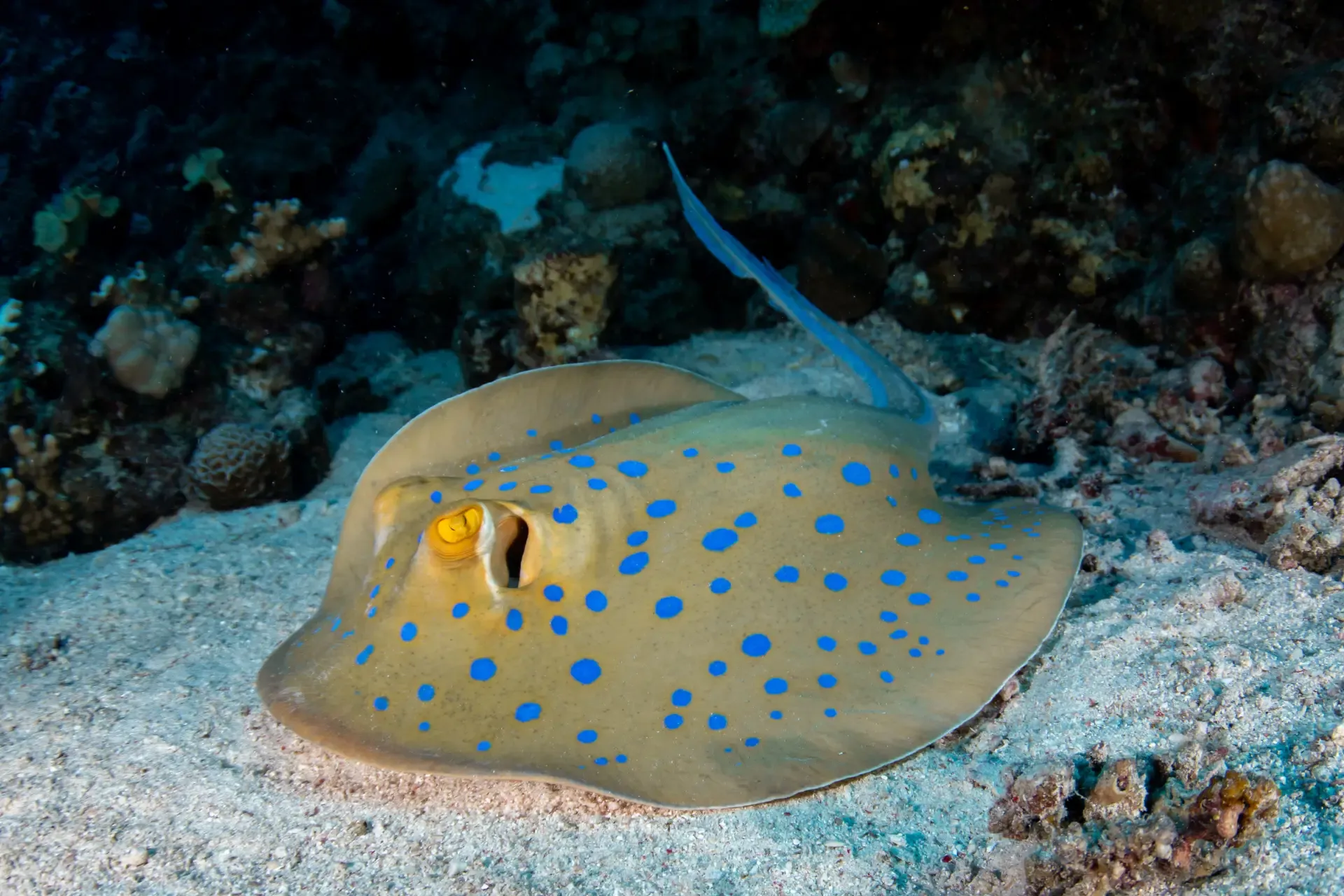
1. Blue-Spotted Stingray (Neotrygon kuhlii)

🔵 Best Places to See Them: Santoson, Tambisaan Reef, Laguna, Crocodile Island
🔵 Size: Up to 35 cm (14 inches) in disc width
🔵 Depth Range: 5–30 meters (16–98 feet)

The blue-spotted stingray is one of Boracay’s most commonly sighted rays. These small but striking creatures feature bright blue spots on a sandy-colored body, making them easy to identify. Often found resting on sandy seabeds or partially hidden under coral ledges, they rely on camouflage to stay safe from predators.

💡 Fun Fact: When startled, they quickly dart away, stirring up sand as they vanish into the reef.

💡 Diver Tip: Look for them in shallow reef areas like Crocodile Island, where they often settle on the seabed between coral formations.


blue spotted ray boracay

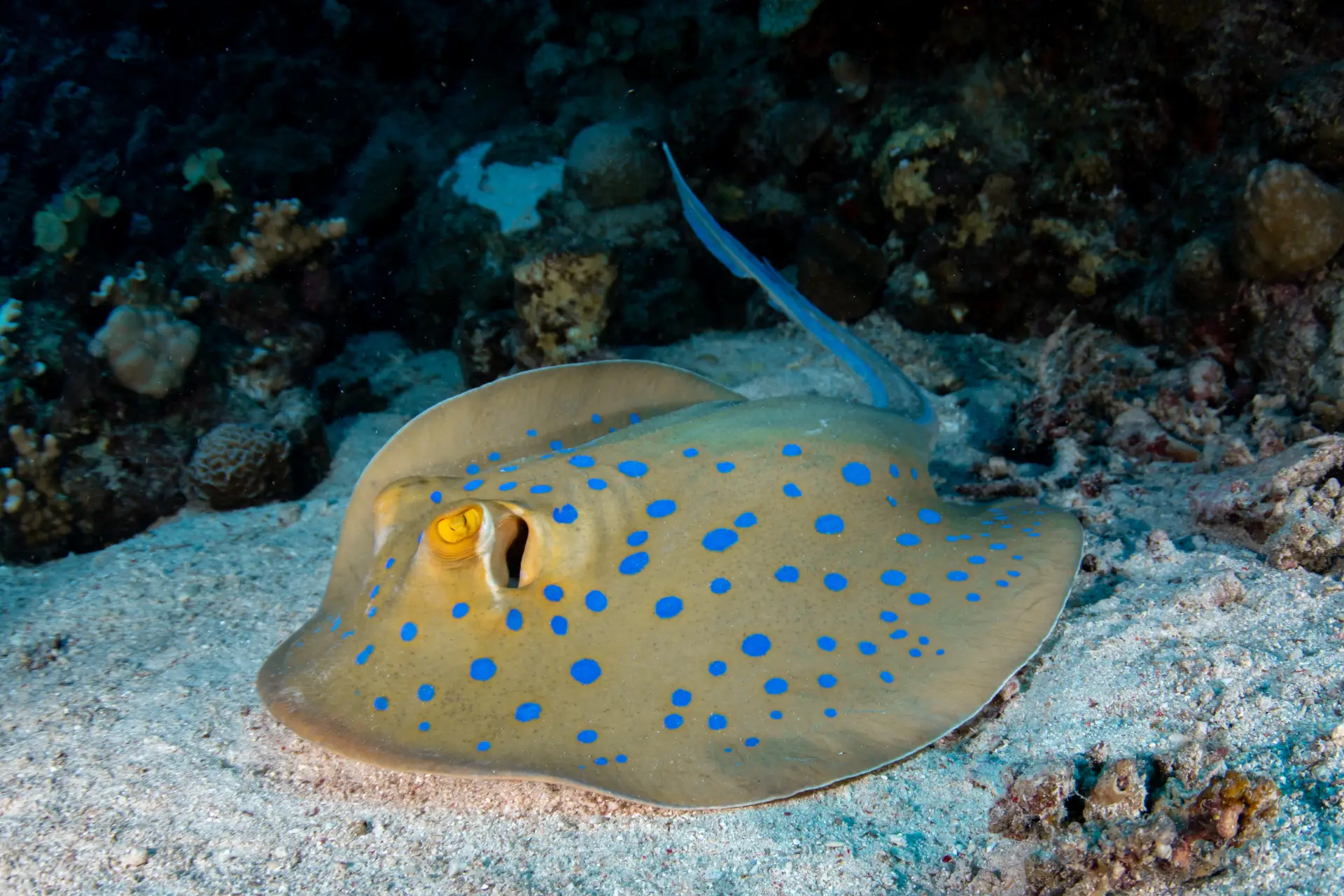
2. Blue-Spotted Ribbontail Ray (Taeniura lymma)

🌊 Best Places to See Them: Crocodile Island, Camia II Wreck, Channel Drift
🌊 Size: Up to 35 cm (14 inches) in disc width
🌊 Depth Range: 3–25 meters (10–82 feet)

Closely related to the blue-spotted stingray, the blue-spotted ribbontail ray is slightly larger and more vibrant, with an electric-blue tail and a more rounded body shape. These rays are more shy and reclusive, preferring to hide under rocky outcrops or coral formations.

💡 Diver Tip: When diving at Channel Drift, keep an eye on the sandy patches where these rays rest between coral heads.


3. Marble Ray (Taeniurops meyeni) (Rare Sightings)

Best Places to See Them: Yapak, Punta Bunga
Size: Can reach up to 3 meters (10 feet) in width
Depth Range: 30–60 meters (98–197 feet)

The marble ray, also known as the black-blotched stingray, is one of the largest stingrays found in the Indo-Pacific. Unlike smaller stingrays, these giants are powerful swimmers and prefer deeper waters. They are rare in Boracay, but experienced divers venturing into deep-wall dive sites like Yapak may be lucky enough to see one.

💡 Fun Fact: Marble rays have a long, venomous tail spine that serves as a defense mechanism against predators.

💡 Diver Tip: To increase your chances of spotting one, drift dive along the deep walls of Yapak and scan the sandy seabed below.


eagle ray boracay

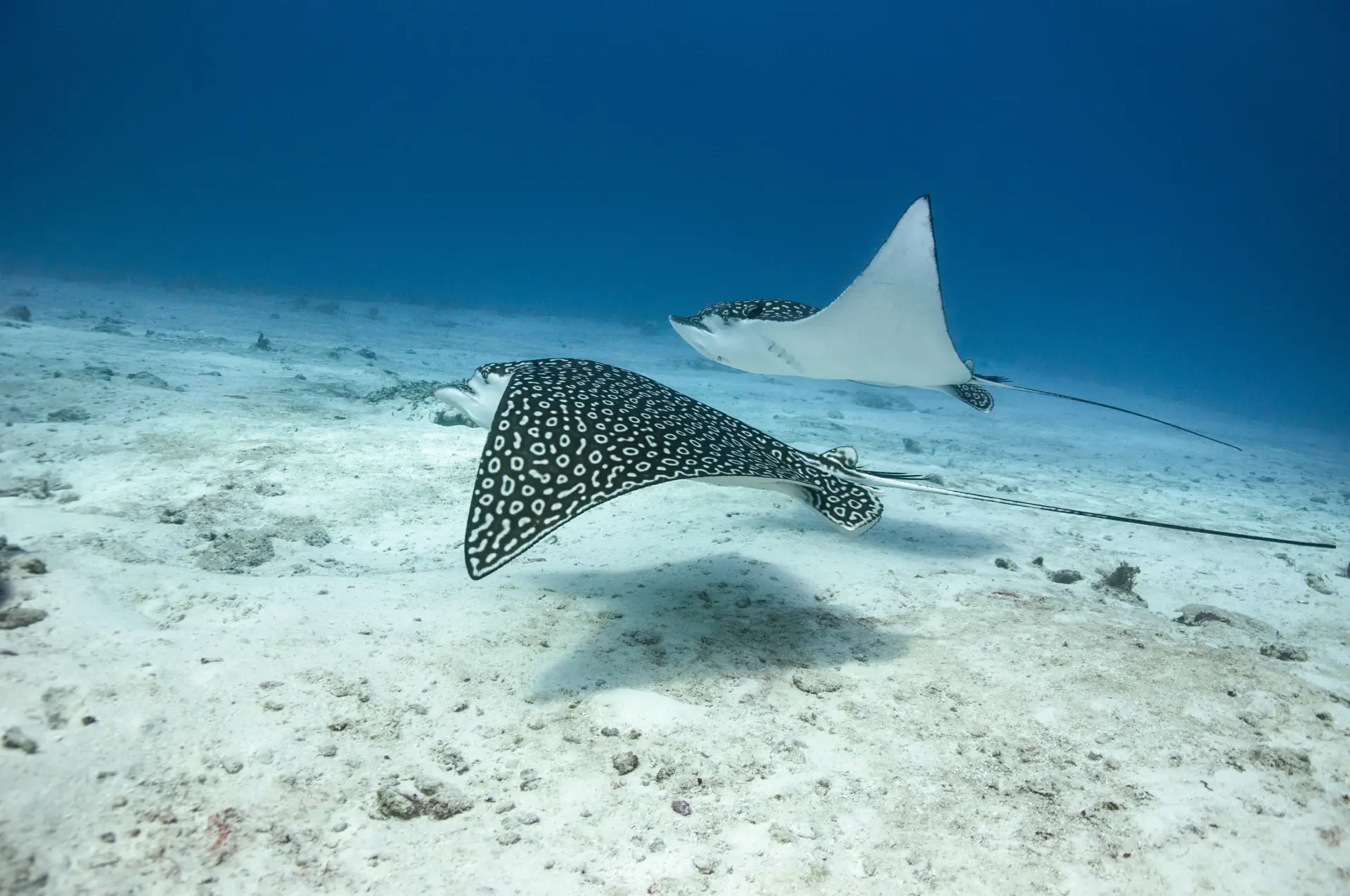
4. Eagle Ray (Aetobatus narinari) (Occasional Sightings)

🦅 Best Places to See Them: Maniguin Island, Yapak
🦅 Size: Can grow up to 3 meters (10 feet) in wingspan
🦅 Depth Range: 10–50 meters (33–164 feet)

The eagle ray is one of the most mesmerizing rays to witness underwater. Unlike stingrays, which tend to rest on the seabed, eagle rays are active swimmers, often seen soaring gracefully through the open ocean. They have a distinctive spotted dorsal pattern and a whip-like tail, making them easy to identify.

💡 Fun Fact: Eagle rays use their strong jaws to crush and eat crustaceans, mollusks, and small fish.

💡 Diver Tip: Eagle rays love open, deep-water environments, so keep an eye out in the blue while diving at Yapak or Maniguin Island.


manta ray philippines

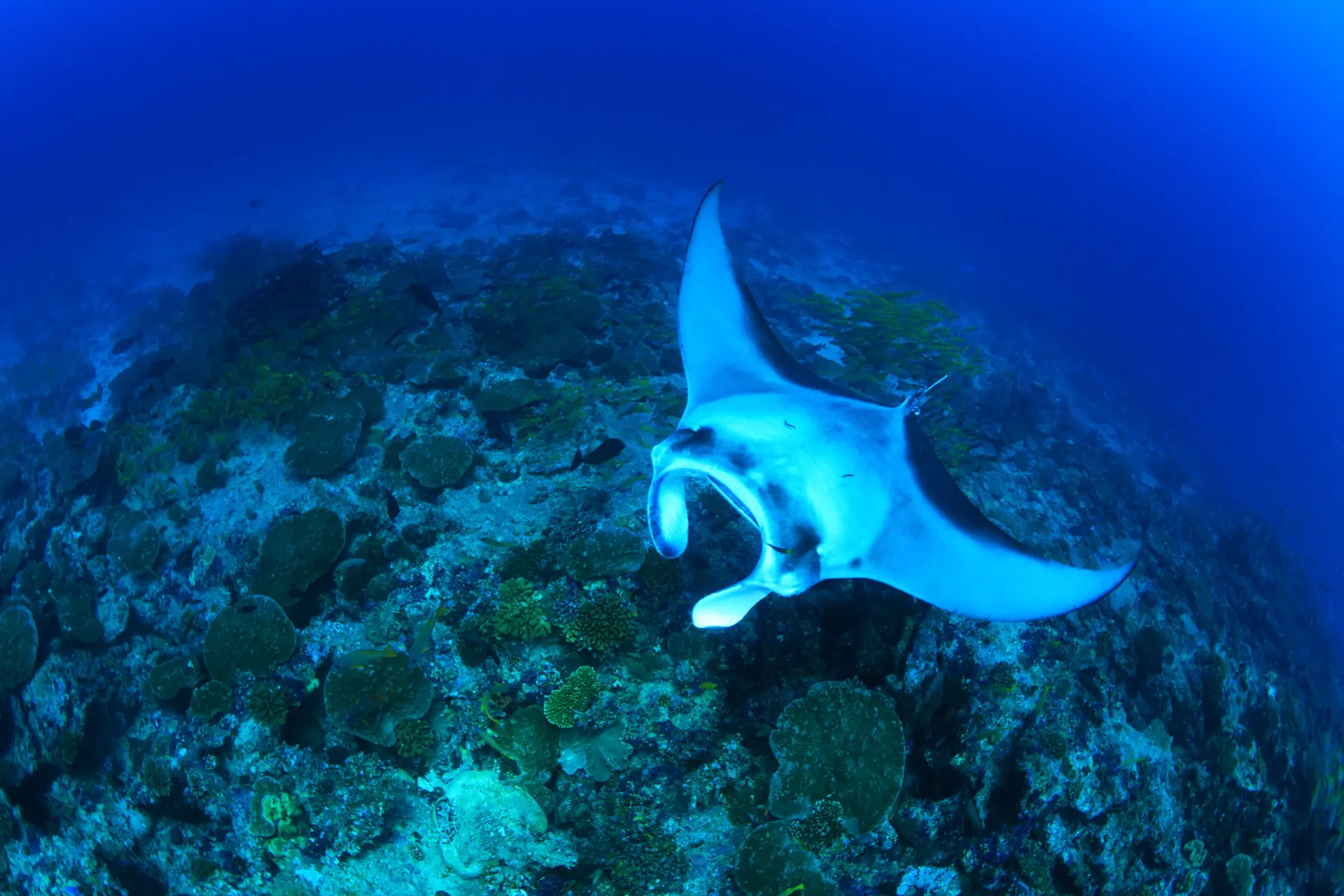
5. Manta Ray (Mobula alfredi) (Rare in Boracay, Common in Nearby Destinations)

Best Places to See Them: Ticao Pass (Masbate), Tubbataha Reefs, Apo Reef
Size: Can reach up to 5.5 meters (18 feet) in wingspan
Depth Range: 10–40 meters (33–131 feet)

While manta rays are not commonly seen in Boracay, divers hoping to see these gentle giants can take trips to Ticao Pass or Tubbataha Reefs, where cleaning stations attract mantas in large numbers. Manta rays are filter feeders, gracefully gliding through the water as they consume plankton with their wide, open mouths.

💡 Diver Tip: If you’re looking to swim with mantas, plan a trip to nearby Ticao Pass or Tubbataha, where sightings are much more common.


Why Are Rays Important to Boracay’s Marine Ecosystem?

Rays play a critical role in maintaining ocean health by:

Regulating prey populations – Rays help control populations of crustaceans, mollusks, and small fish, keeping marine food webs balanced.
Contributing to seafloor health – As bottom-dwellers, stingrays stir up sediment, which aids in nutrient cycling for smaller organisms.
Supporting coral reefs – Eagle rays and mantas often travel between reef systems, helping spread nutrients across large areas.

Protecting rays is crucial for keeping Boracay’s waters healthy and ensuring sustainable diving experiences for future generations.


Where to See Rays While Diving in Boracay

If you want to increase your chances of spotting rays, here are the best dive sites to visit:

📍 Crocodile Island – Best for blue-spotted stingrays and ribbontail rays.
📍 Channel Drift – Occasionally spotted rays resting on sandy bottoms.
📍 Tambisaan Reef – A great spot for shallow-water stingrays.
📍 YapakEagle rays and marble rays are sometimes seen in deeper sections.
📍 Maniguin Island – One of the best places for occasional eagle ray encounters.


Final Thoughts: The Majesty of Rays in Boracay

Whether gliding through the blue or resting on the sandy seabed, rays are some of the most fascinating marine creatures a diver can encounter. Boracay offers diverse opportunities to observe different species, from the small and colorful blue-spotted stingray to the majestic eagle ray patrolling deep waters.

At New Wave Divers Boracay, we offer guided dives to the best ray-spotting locations, ensuring you get the most out of your underwater adventure.

Ready to dive with Boracay’s most graceful marine creatures? Book your dive with New Wave Divers today!


Wish to know more about the diving in Boracay? Our team will be delighted to answer your questions and let us know why we should be your first choice when planning your dive vacation to the Philippines. We hope to hear from you soon!

Contact Us

Continue reading

03/12/2025 Dive Log – Bakinghai

Dive Log: 03/12/2025

Dive Site Name: Bakinghai

Dive Depth: 22.2 meters

Dive Duration: 47 minutes

About The Dive: Cool dive, as we were going down the line, first lucky staff we see is a green turtle, as we were swimming down the wall we saw a very black frog fish, then we swam to the patches before we got there,we were greeted by a school of barracudas, as we were on our way up the wall we say a very green frog fish and a sea snake, as we were doing our safety stop a turtle pass us by to go the surface to breathe, now how lucky was that.

Get 10% OFF Your Dive when you pay cash or book online.
This is default text for notification bar