Author: Scuba Dive Marketing

Boracay Dive Sites Uncovered: 5 Hidden Gems for Divers

Boracay Dive Sites Uncovered: 5 Hidden Gems for Divers

Boracay Dive Sites Uncovered: 5 Hidden Gems for Divers

Boracay Island is renowned worldwide for its pristine beaches, vibrant nightlife, and welcoming atmosphere. However, beneath the surface of its azure waters lies a diving paradise waiting to be explored. While famous dive spots like Yapak and Angol Point attract plenty of attention, Boracay offers numerous lesser-known yet equally stunning dive sites that promise unique adventures for divers of all skill levels. Here’s our guide to five hidden gem dive sites around Boracay, guaranteed to enhance your diving experience.

1. Friday’s Rock

Friday’s Rock may not receive the fame of nearby Yapak, but it’s an underwater marvel not to be missed. Located close to the iconic White Beach, this site is ideal for divers who love marine life diversity. It features coral-covered rock formations and vibrant reef systems teeming with macro critters, including nudibranchs, ornate ghost pipefish, and colorful frogfish. The depth here ranges from 12 to 18 meters, perfect for leisurely dives, underwater photography, and macro enthusiasts.

2. Crocodile Island

Named for its crocodile-shaped silhouette above the surface, Crocodile Island offers some of the richest marine biodiversity in Boracay. Despite its proximity to the main island, it often remains overshadowed by other popular spots. Its shallow reef system, ranging from 5 to 20 meters, showcases a stunning array of corals, tropical reef fish, and fascinating marine creatures like banded sea snakes, octopuses, and even occasional reef sharks. The visibility here is exceptional, making it ideal for both beginners and seasoned divers looking for vibrant underwater photography opportunities.

3. Camia Shipwreck

The Camia shipwreck is Boracay’s hidden treasure for wreck-diving enthusiasts. Deliberately sunk in 2001 to create an artificial reef, the Camia now lies peacefully at approximately 30 meters, cloaked in lush coral growth and inhabited by diverse marine life. Divers can explore its structure, swim through compartments, and encounter schools of batfish, lionfish, moray eels, and occasional giant groupers. The wreck offers a captivating exploration for advanced divers who appreciate both history and marine biodiversity.

4. Laurel Island

Just a short boat ride from Boracay lies Laurel Island, a small rocky outcrop that is often overlooked by divers visiting the area. Beneath its serene surface awaits an enchanting underwater landscape characterized by walls, caves, and tunnels adorned with soft and hard corals. Visibility here can reach up to 30 meters, allowing divers to appreciate the full splendor of marine life, including large schools of jacks, fusiliers, and barracudas. Divers may even encounter turtles or eagle rays gracefully gliding past.

5. Laguna de Boracay

Situated on the eastern side of Boracay Island, Laguna de Boracay provides a tranquil diving environment away from the busy tourist areas. This dive site is particularly appealing to macro lovers and underwater photographers. Laguna’s seabed hosts an array of marine life rarely spotted elsewhere on the island, including pygmy seahorses, flamboyant cuttlefish, various nudibranch species, and pipefish. With depths ranging from 10 to 20 meters, it’s suitable for divers of all skill levels, making it an excellent location to fine-tune your buoyancy control and macro photography skills.

Why Explore These Hidden Dive Sites?

While Boracay’s famous dive sites deserve the accolades they receive, exploring these lesser-known locations provides a unique experience away from the usual crowds. These hidden gems offer divers the opportunity to witness marine life in peaceful, pristine conditions, often yielding memorable encounters with rare species.

Dive Responsibly

When visiting these hidden dive gems, it’s crucial to practice responsible diving. Always follow the principles of eco-friendly diving:

  • Avoid touching or disturbing marine life.

  • Maintain excellent buoyancy control to prevent damaging corals.

  • Take only pictures and leave only bubbles, preserving these treasures for future divers.

Dive with New Wave Divers Boracay

Discovering Boracay’s hidden dive sites is made safe, enjoyable, and accessible with experienced guides from New Wave Divers. Our professional team ensures you have enriching dives, prioritizing safety, education, and environmental stewardship. Whether you’re seeking macro photography adventures, thrilling wreck dives, or tranquil reef exploration, New Wave Divers will help you unlock the secrets beneath Boracay’s stunning waters.

Ready to dive deeper into Boracay’s underwater secrets? Join New Wave Divers and uncover these hidden gems for yourself.


Wish to know more about the diving in Boracay? Our team will be delighted to answer your questions and let us know why we should be your first choice when planning your dive vacation to the Philippines. We hope to hear from you soon!

Contact Us

Continue reading

02/26/2025 Dive Log – Virgin Drop

Dive Log: 02/26/2025

Dive Site Name: Virgin Drop

Dive Depth: 37 meters

Dive Duration: 31 minutes

About The Dive: Fantastic deep wall dive today !
We encountered a thermocline around 27 meters, swam with schools of fusiliers and banner fish before crossing our path with a solitaire big bump head parrotfish and a stingray in the sandy area !

02/25/2025 Dive Log – Fridays reef

Dive Log: 02/25/2025

Dive Site Name: Fridays reef

Dive Depth: 12 meters

Dive Duration: 45 mins

About The Dive: Today we had a fantastic dive in Friday's reef.
The reef is quite shallow so our max depth was 12 meters.
The colors of the soft and hard corals are amazing.
Lots of small tropical fish swimming around and also 2 schools of small Snappers.
We also saw a friendly Banded sea snake as well as a Hawksbill Turtle feeding on corals.
Great dive 😀

sea snake boracay

Sea Snakes of Boracay: Mysterious and Misunderstood

Sea Snakes of Boracay: Mysterious and Misunderstood

Sea Snakes of Boracay: Mysterious and Misunderstood

The waters surrounding Boracay are teeming with marine life, from vibrant reef fish to elusive macro creatures. Among the many fascinating species that divers encounter, sea snakes stand out as one of the most intriguing. With their graceful movements and striking patterns, these serpentine swimmers are often misunderstood, feared due to their venomous reputation, yet rarely aggressive toward humans.

For divers and underwater enthusiasts, encountering a sea snake is a rare and thrilling experience. In this article, we’ll explore the species of sea snakes found in Boracay, their unique adaptations, behaviors, and the best places to see them while diving.


What Are Sea Snakes?

Sea snakes belong to the Elapidae family, which includes their land-based relatives—cobras and kraits. Unlike land snakes, sea snakes have evolved to live in marine environments, with specialized adaptations that allow them to thrive underwater.

Key Adaptations of Sea Snakes:

  • Paddle-Shaped Tail: Acts like a fin, helping them glide effortlessly through the water.
  • Salt Glands: They can expel excess salt, allowing them to survive in the ocean without drinking fresh water.
  • Lung Adaptation: Unlike fish, they must surface to breathe, but their lungs can extend nearly the length of their bodies, enabling them to stay submerged for up to two hours.
  • Highly Potent Venom: Some sea snakes produce venom more toxic than cobras, but they rarely bite humans unless provoked.

Despite their reputation, sea snakes are generally docile and non-aggressive, making them a fascinating species to observe during a dive.


Sea Snakes Found in Boracay

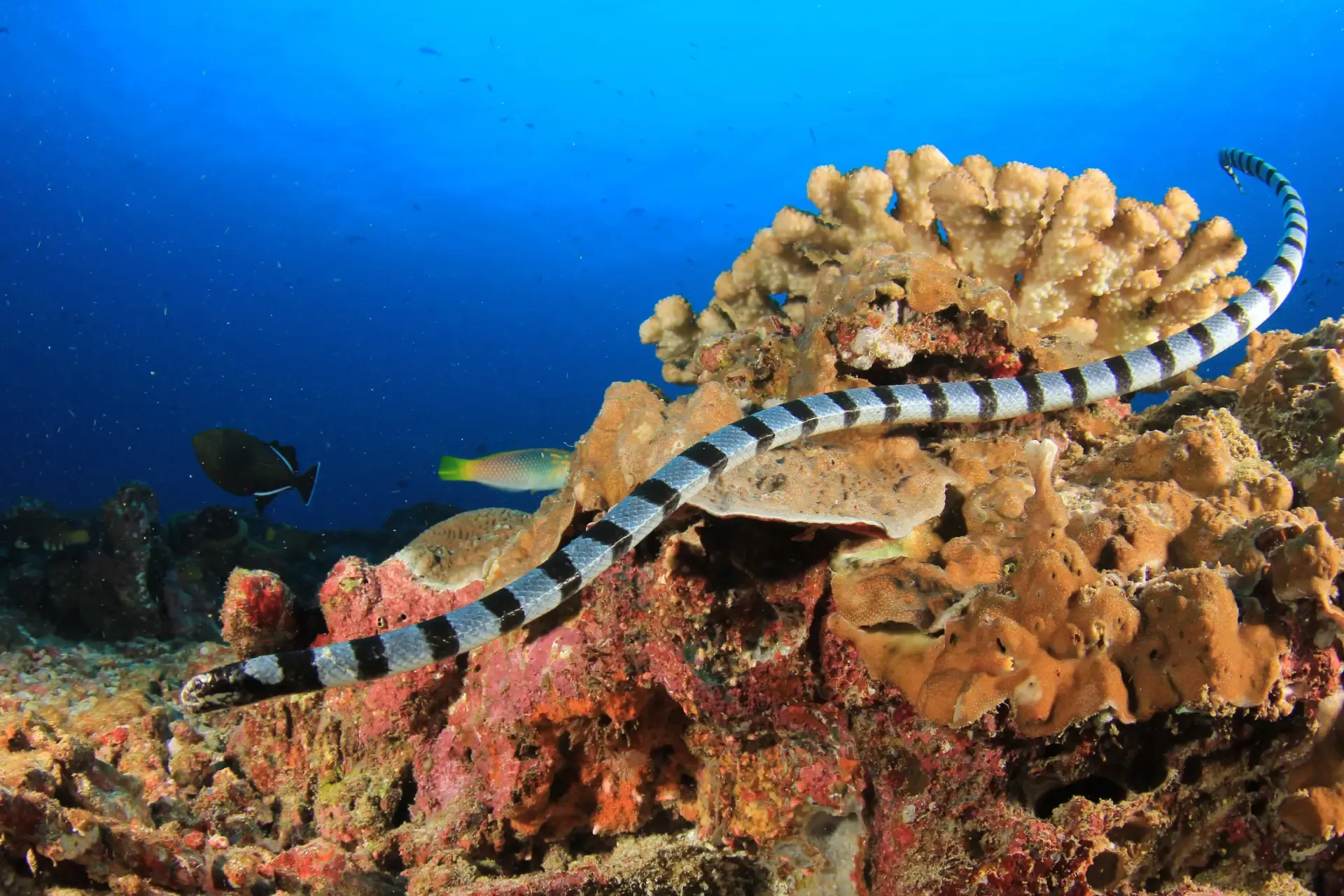
Several species of sea snakes can be found in Boracay’s waters, but the most commonly encountered is the Banded Sea Krait (Laticauda colubrina).

Banded Sea Krait (Laticauda colubrina)

Distinct Features: Black-and-white bands, a flattened paddle-like tail, and a yellow snout.
Size: Can grow up to 1.5 meters (5 feet) in length.
Behavior:

  • Unlike fully aquatic sea snakes, banded sea kraits are semi-aquatic, meaning they often return to land to rest and lay eggs.
  • They are non-aggressive and will usually retreat if approached.
  • Often seen weaving through coral reefs in search of small fish, eels, and crustaceans.
    Venom: Extremely potent, but bites are incredibly rare. Most sea snake bites occur when fishermen accidentally handle them.

Although the Banded Sea Krait is the most commonly spotted species, other less frequently seen sea snakes may occasionally make an appearance in Boracay’s deeper waters.


Best Dive Sites to Spot Sea Snakes in Boracay

For divers hoping to encounter a sea snake in the wild, Boracay’s diverse dive sites provide ample opportunities. They are often found hunting in coral reefs, near rocky outcrops, and in areas with plenty of small fish.

📍 Crocodile Island

  • One of the best sites to spot banded sea kraits, as the shallow reef is home to an abundance of eels and small fish—prime hunting grounds for sea snakes.
  • Also a great location for macro photography and spotting nudibranchs, frogfish, and pipefish.

📍 Tambisaan Reef

  • This dive site has a mix of coral formations and sandy patches, which sea snakes often navigate while foraging.
  • Offers excellent visibility for spotting marine life.

📍 Friday’s Rock

  • A great site for beginner divers that also provides chances to see sea snakes among the reef structures.

📍 Channel Drift

  • The currents in this area bring plenty of food, making it a potential hunting ground for sea snakes.
  • Divers should be aware of the current strength while keeping an eye out for elusive sea creatures.

The Role of Sea Snakes in the Marine Ecosystem

Sea snakes play an essential role in maintaining the balance of marine ecosystems.

🌊 Natural Predators: They primarily feed on small fish, moray eels, and crustaceans, preventing overpopulation of certain species.
🌊 Prey for Larger Marine Life: While venomous, they are hunted by sharks, larger fish, and sea birds.
🌊 Indicators of a Healthy Reef: Their presence often signals a rich and diverse marine environment, as they rely on thriving reef ecosystems for food.

By protecting Boracay’s reefs, divers and conservationists help ensure that species like sea snakes continue to thrive in their natural habitat.


Are Sea Snakes Dangerous? Understanding Their Venom and Behavior

One of the biggest misconceptions about sea snakes is that they are aggressive and a threat to divers. In reality, sea snakes are shy, non-aggressive creatures that prefer to avoid confrontation.

Understanding Sea Snake Behavior:

✔️ Curious but Not Aggressive: Sea snakes may approach divers out of curiosity but rarely show signs of aggression.
✔️ Venomous but Not a Threat: While their venom is highly potent, they almost never bite humans unless handled or provoked.
✔️ Timid and Reclusive: They tend to retreat when they feel threatened.

How to Safely Observe Sea Snakes While Diving

  • Do Not Chase or Corner Them – Allow them to move freely without feeling trapped.
  • Avoid Touching Them – Even though they are not aggressive, they may bite if they feel threatened.
  • Maintain Neutral Buoyancy – Avoid accidental contact with the reef where a sea snake might be hiding.
  • Stay Calm and Observe – Enjoy the moment from a respectful distance.

Most sea snake bites occur when people try to handle them, often in fishing situations. As long as divers respect their space, there is no real danger in observing them in the wild.


Myths and Misconceptions About Sea Snakes

There are many myths surrounding sea snakes, leading to unnecessary fear. Let’s debunk some common misconceptions:

Myth: Sea Snakes Chase Divers
Fact: Sea snakes do not chase humans. If they approach, it is usually out of curiosity before they swim away.

Myth: Their Bite is Always Fatal
Fact: While highly venomous, sea snakes rarely bite, and antivenom is available in case of emergencies.

Myth: They Can’t Move on Land
Fact: Banded sea kraits, in particular, are semi-aquatic and frequently come ashore to rest.

Understanding these creatures helps promote respect rather than fear, allowing divers to appreciate them as a vital part of Boracay’s marine ecosystem.


Final Thoughts: Encountering Sea Snakes in Boracay

For divers seeking a unique and fascinating encounter, spotting a sea snake in Boracay’s waters is an unforgettable experience. These elegant reptiles, with their graceful swimming style and secretive nature, are a testament to the diversity and beauty of marine life in Boracay.

At New Wave Divers Boracay, we prioritize safe and responsible diving, ensuring that divers can observe these magnificent creatures without disturbing their natural behavior. If you’re eager to explore Boracay’s reefs and encounter a Banded Sea Krait in its natural habitat, book a dive with us today!

Ready to dive into Boracay’s underwater world? Join us at New Wave Divers and experience the beauty of sea snakes firsthand!


Wish to know more about the diving in Boracay? Our team will be delighted to answer your questions and let us know why we should be your first choice when planning your dive vacation to the Philippines. We hope to hear from you soon!

Contact Us

Continue reading

02/21/2025 Dive Log – Balinghai

Dive Log: 02/21/2025

Dive Site Name: Balinghai

Dive Depth: 18 meters

Dive Duration: 48 mins

About The Dive: This morning we headed out to Balinghai for a shallow wall dive.
On the top the wall is only around 10 meters deep.
It has a lot of different types of corals including some large barrel sponges.
We saw a Green turtle resting on corals.
On the bottom of the wall at 18 meters we were once again greeted by a school of Barracudas.
Along the wall we often see different types of Shrimps and Nudibranchs.
We also spotted a black Frogfish on our ascend up the wall.
Everyone enjoyed it and some were lucky to take photos for memories of a great dive

02/20/2025 Dive Log – Camia 2

Dive Log: 02/20/2025

Dive Site Name: Camia 2

Dive Depth: 27 meters

Dive Duration: 37 mins

About The Dive: This morning we did a wreck dive on Camia 2.
This wreck always has a large abundance of marine life.
We had a small Orangutan crab, Ornate ghost pipefish and some flatworms.
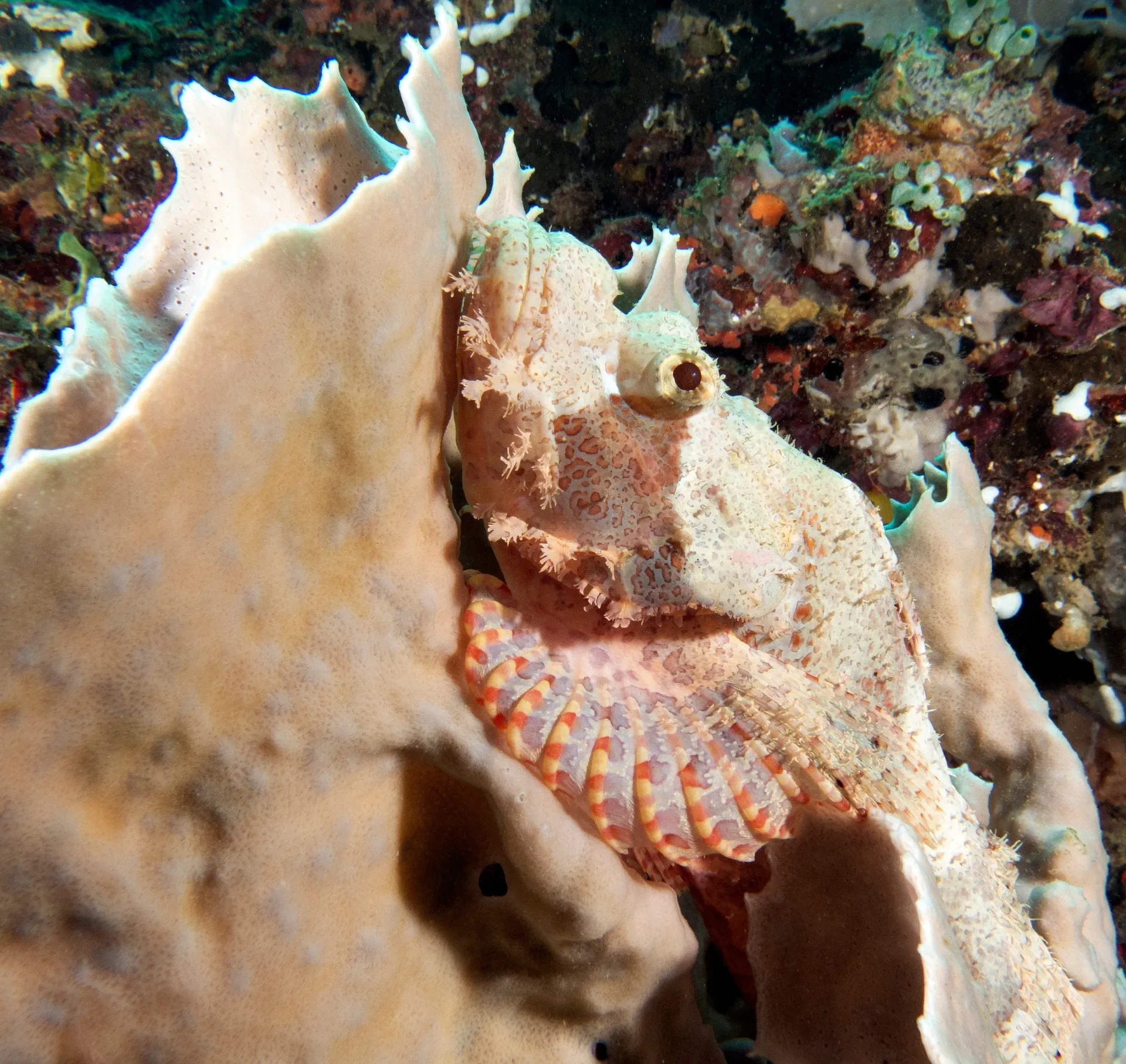
Around the wheel house there was a school of yellow Fusiliers, Snappers snd 2 Bearded scorpionfish and Trumpet fish.
The family of Batfish were extremely playful during our safety stop by swimming between the divers.
We had great visibility also 😀

02/19/2025 Dive Log – Angol Point

Dive Log: 02/19/2025

Dive Site Name: Angol Point

Dive Depth: 15 meters

Dive Duration: 47 mins

About The Dive: Angol Point is a great dive site for open water divers.
It's a shallow but very colorful reef.
We had a light current with 20 meter visibility.
We saw some Ribbon Eels, Octopus, Frogfish, Nudibranchs and different types of anemonefish.
It's a also a great dive site for discover scuba divers

02/14/2025 Dive Log – Friday’s Rock

Dive Log: 02/14/2025

Dive Site Name: Friday's Rock

Dive Depth: 17.5 metere

Dive Duration: 47 minutes

About The Dive: Had 4 fun divers, went to Friday's Rock, as we were going down the line we were met by 3 bat fish, our welcoming committee, you can say, we went straight out on the patche and a giant morrey eel was there, as I scanned the floor I found my long lost friend the orangutan crab, haven't seen him for a while, on the big rock the big grouper was hanging around, I saw something moving from the corner of my eye, went to investigate and it was a black frog fish.
Everybody was happy with the dive

Get 10% OFF Your Dive when you pay cash or book online.
This is default text for notification bar